

Artemis II Mission Signals New Global Race to Reach the Moon
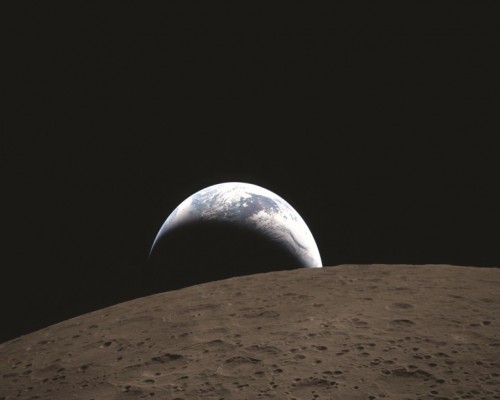
The launch of NASA’s Artemis II mission preparations has intensified the global race to return humans to the Moon, as the United States moves closer to sending astronauts into lunar orbit for the first time in more than five decades.
With the Artemis programme, the United States is not only aiming to re-establish a human presence on the Moon but also laying the foundation for long-term lunar exploration, scientific research, and the future extraction of key resources such as water, hydrogen and helium. The mission is also being seen as a critical stepping stone toward eventual human missions to Mars.
NASA’s broader objective is to land astronauts on the Moon again under the Artemis programme and build a sustained exploration framework that could support long-duration missions and scientific operations. Artemis II represents a major milestone in that roadmap.
The mission is expected to carry four astronauts aboard the Orion spacecraft, which will travel around the Moon and return to Earth without landing. This will be the first crewed test flight of the Artemis programme and the first time since the Apollo era that humans will journey into deep space beyond low Earth orbit.
NASA has identified 2028 as a key target year for the Artemis programme’s longer-term goals, while future phases are expected to include astronaut landings near the Moon’s south pole—a region of high scientific interest because of the possibility of frozen water and other valuable resources.
As part of Artemis II, the Orion spacecraft will carry a team of astronauts on a mission designed to test the spacecraft’s systems and operational readiness before future landing missions. The crew includes Reid Wiseman, Victor Glover, Christina Koch, and Jeremy Hansen, representing both the United States and Canada. Their participation reflects the growing international character of modern space exploration.
The spacecraft is expected to travel around the Moon and return to Earth after approximately 10 days. Unlike future Artemis missions, Artemis II is not intended to land on the lunar surface. Instead, it will validate critical systems needed for future crewed lunar landings.
The mission carries historic significance for multiple reasons. It will mark the first time a woman and a person of color are sent on a lunar mission under NASA’s human exploration programme, highlighting a new era of diversity in space travel.
Artemis II is also a major engineering and scientific test. The Orion capsule and the Space Launch System (SLS) rocket are central to NASA’s long-term plans, and the mission will evaluate their performance under real deep-space conditions.
According to mission planning, the spacecraft will cover a vast distance during its lunar flyby. The crew is expected to travel hundreds of thousands of kilometers from Earth, moving far beyond the boundaries of typical orbital missions. At its farthest point, the spacecraft is expected to reach approximately 370,000 to 400,000 kilometers from Earth during the mission profile, depending on trajectory design and mission execution.
NASA has also prepared for emergency and technical contingencies. The mission architecture includes testing communication systems, crew safety protocols, navigation precision and spacecraft resilience under the harsh conditions of deep space.
The Artemis programme is being closely watched around the world, not only because of its scientific ambitions but also because it is shaping a new geopolitical and technological era in lunar exploration. Countries including China, Russia and other emerging space powers are also pursuing Moon missions, making the lunar domain once again a center of strategic and scientific competition.
More than a symbolic return, Artemis II represents the beginning of a larger transformation in human spaceflight—one that aims to move beyond short visits and toward a sustained human presence beyond Earth.