
Big Breaking | Supreme Court Stays UGC’s ‘Promotion of Equity Regulation 2026’
New Delhi | 29 January 2026 | 01:39 PM
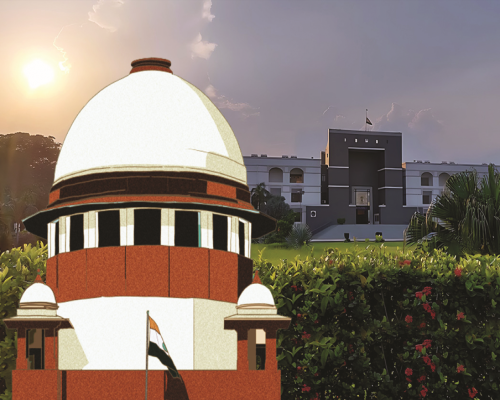
In a major development with far-reaching implications for higher education across the country, the Supreme Court of India has put an interim stay on the ‘Promotion of Equity Regulation 2026’ issued by the University Grants Commission (UGC).
The apex court observed that the language of the regulation is ambiguous and leaves room for potential misuse, raising serious constitutional concerns. Until a comprehensive review is undertaken, the court has directed that the regulation shall not be implemented.
Why Did the Supreme Court Intervene?
Hearing a Public Interest Litigation (PIL) filed against the regulation, the Supreme Court bench noted that several provisions lack clarity and could lead to arbitrary interpretation. The court held that laws framed in the name of equity must be precise, balanced, and constitutionally sound, especially when they directly impact students’ rights.
The bench directed the Central Government to constitute an expert committee comprising legal scholars, educationists, and constitutional experts to review and re-draft the regulation wherever necessary.
Key Observations from the Bench
• The court remarked that vague drafting can result in selective or biased enforcement.
• It emphasized that equality before law must remain the guiding principle in educational governance.
• The bench underlined that India must not move towards segregated or exclusionary education models, directly or indirectly.
Concerns Over Section 3C
Senior advocates appearing in the matter argued that Section 3C of the regulation could unintentionally promote caste-based distinctions, thereby violating:
• Article 14 (Right to Equality)
• Article 19 (Freedom of Expression and Choice)
It was contended that instead of reducing discrimination, such provisions may widen social divisions within academic institutions.
Court’s Stand on Constitutional Balance
The Supreme Court made it clear that while affirmative measures are constitutionally permissible, they must be progressive, non-discriminatory, and proportionate. The court reiterated its commitment to safeguarding fundamental rights while ensuring social justice.
Nationwide Debate Intensifies
The stay has triggered a nationwide debate among academicians, legal experts, students, and policymakers.
• Supporters argue that the regulation aims to uplift marginalized communities.
• Critics fear it may institutionalize inequality under the guise of equity.
The Central Government has been asked to submit its response after the expert committee completes its review. The matter will now be taken up in the next hearing, which is expected to shape the future of equity-based regulations in Indian higher education.
Stay tuned to UV India News for further updates on this developing story.