
Delay in Trade Agreement with the United States Brings Dual Advantage for India
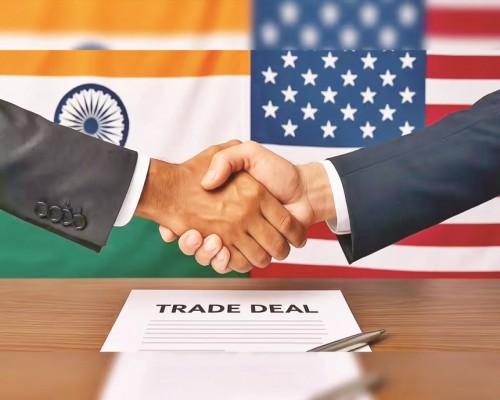
The prolonged negotiations over a bilateral trade agreement between India and the United States have unexpectedly yielded a strategic advantage for India, enabling it to both diversify its export markets and strengthen its trade position with the American economy.
Trade discussions between the two countries have been ongoing, with both sides exploring the contours of a comprehensive trade framework. While the agreement has not yet been finalized, the interim period has allowed Indian exporters to recalibrate their global outreach and explore alternative markets to mitigate tariff-related risks.
Earlier, the United States announced tariff measures affecting several categories of imports. In response, India intensified efforts to reduce dependence on a single export destination and expanded its commercial engagement with multiple countries. The government activated its trade missions and commercial attachés across approximately 200 nations, encouraging exporters to tap new markets and reduce exposure to tariff fluctuations.
As a result, Indian exports witnessed significant diversification. Following the imposition of additional duties by the United States on select categories—reportedly including a 25 percent tariff increase—Indian exporters shifted focus to markets such as Vietnam, Belgium, China, and Russia. In some of these destinations, exports of products such as marine goods reportedly increased between 20 percent and 90 percent during the financial year 2024–25 compared to the previous year.
This market diversification strategy helped cushion the immediate impact of tariff pressures. At the same time, trade volumes with the United States remained resilient. During the April–December period of 2025, India exported goods worth approximately 65.88 billion US dollars to the United States, reflecting steady performance despite policy uncertainties.
Industry leaders believe that once the trade agreement is finalized, it could usher in a new growth phase for Indian exports. According to Shaktivel, Chairman of the Apparel Export Promotion Council, tariff relief in the US market would be particularly beneficial for labour-intensive sectors such as textiles and garments. Reduced duties would improve price competitiveness and potentially expand India’s market share in the American retail segment.
The evolving trade landscape has thus created a “dual benefit” scenario. On one hand, Indian exporters have become more agile and geographically diversified. On the other, the pending trade pact continues to hold promise for deeper market access in one of the world’s largest consumer economies.
The government’s proactive trade diplomacy—marked by outreach to multiple countries and continuous engagement with industry stakeholders—has played a key role in navigating the challenges posed by tariff adjustments. Officials indicate that diversification efforts will continue even after the conclusion of the US trade agreement, ensuring long-term resilience in India’s export ecosystem.
Experts observe that this phase of recalibration has strengthened India’s negotiating position. By demonstrating the capacity to expand into alternative markets, India has reduced vulnerability to unilateral trade measures while preserving strong commercial ties with the United States.