

Delhi Emerges as the World’s Most Polluted City
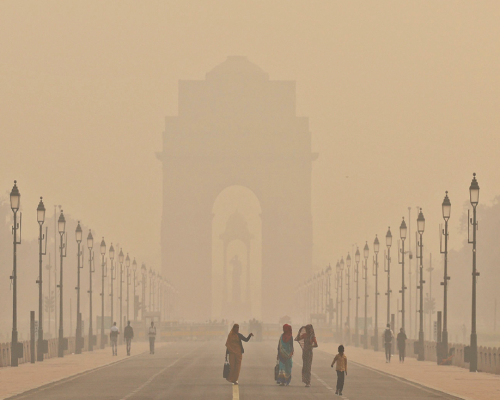
Air quality index hits hazardous levels post-Diwali; NCR cities also face severe smog crisis
The national capital has once again earned the dubious distinction of being the most polluted city in the world, as air quality levels deteriorated sharply following the Diwali festivities. According to Swiss air monitoring firm IQAir, Delhi topped the global pollution index with an Air Quality Index (AQI) reading of 433, placing it in the hazardous category.
Other cities in the global top five list included Kolkata (235), Lahore (233), Tashkent (181), and Hanoi (176) — making India home to the world’s most toxic air for yet another winter season.
Post-Diwali Smog Engulfs NCR
Despite repeated warnings and restrictions on firecrackers, the air quality in Delhi and adjoining NCR towns plummeted to severe levels immediately after Diwali night. The Central Pollution Control Board (CPCB) reported that the combination of fireworks, stagnant winds, and vehicular emissions created a thick layer of smog, reducing visibility across the region.
Experts have warned that the situation is particularly alarming in areas such as Anand Vihar, Ashok Vihar, and Punjabi Bagh, where AQI readings have consistently stayed above 450. Even cities like Gurugram, Noida, and Faridabad reported “severe” pollution levels ranging between 300–400 AQI.
NCR’s Air Quality Snapshot
|
City |
AQI (Pre-Diwali) |
AQI (Post-Diwali) |
|
Ghaziabad |
245 |
370 |
|
Faridabad |
125 |
268 |
|
Gurugram |
295 |
370 |
|
Noida |
329 |
320 |
|
Greater Noida |
287 |
282 |
A Four-Year Comparison
|
Year |
Pre-Diwali AQI |
Post-Diwali AQI |
|
2022 |
296 |
345 |
|
2023 |
220 |
218 |
|
2024 |
259 |
312 |
|
2025 |
302 |
351 |
(Source: CPCB)
Experts Sound the Alarm
Environmentalists say that despite multiple government interventions — such as the Graded Response Action Plan (GRAP), bans on construction dust, and curbs on industrial emissions — the results remain minimal due to poor enforcement.
“If cities like Los Angeles, Beijing, and London can bring down air pollution with strict enforcement and cleaner fuels, then why can’t Delhi?” questioned Anumita Roychowdhury, policy expert at the Centre for Science and Environment (CSE).
According to her, emission control from vehicles, brick kilns, and stubble burning continues to remain inadequate, while rapid urban expansion has added to the challenge.
The Way Forward
To achieve sustainable air quality improvements, experts suggest:
- Expanding Delhi’s electric public transport network.
- Phasing out diesel generators and older vehicles.
- Strict control on biomass and stubble burning in neighboring states.
- Enhanced real-time pollution monitoring and penalties for non-compliance.
With winter approaching, meteorologists warn that weather conditions will likely worsen smog levels across northern India. The capital, already struggling with toxic air, must now act swiftly and decisively — before clean air becomes an unaffordable luxury.