

Government Extends Support to Small Exporters
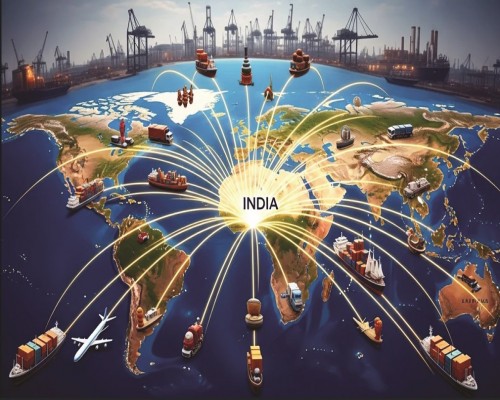
India’s export ecosystem is undergoing a major transition, with growing policy attention focused on strengthening small exporters and micro, small and medium enterprises (MSMEs). Experts and industry observers note that digital platforms and e-commerce-based export models have significantly reshaped the way Indian products reach global markets, offering both unprecedented opportunities and emerging challenges for small producers.
India’s export framework has traditionally been dominated by large companies. However, the country also has a vast base of micro and small enterprises, artisans, handicraft producers, and rural manufacturers who form the backbone of employment and grassroots economic activity. Digital trade platforms have enabled these small sellers to reach international consumers in more than 200 countries without maintaining foreign offices or large distribution networks. As a result, many small businesses have gained direct access to overseas markets for the first time.
Under the evolving digital export model, foreign buyers place orders directly, and products are shipped from India to international destinations. This reduces intermediaries, lowers transaction costs, and enables even home-based enterprises to participate in global trade. Sectors such as handicrafts, textiles, apparel, natural products, and traditional goods have witnessed rising international demand, creating new income streams for small entrepreneurs.
However, experts caution that the shift toward large international e-commerce and warehouse-based export systems may have long-term implications for India’s domestic trade structure. In warehouse-driven export models, Indian sellers stock their products in overseas fulfillment centers, where foreign platforms handle logistics, pricing, and final sales. While this offers convenience and access to global consumers, it also limits the control of Indian sellers over pricing, branding, and customer relationships.
Analysts warn that in such systems, small Indian exporters may gradually become “price-takers” rather than independent market participants. The profit margin often shrinks because the final sale price is influenced by foreign platform fees, warehousing costs, and overseas marketing expenses. In contrast, Indian retailers selling directly through digital platforms retain better control over retail margins, branding, and customer engagement.
Illustrating the impact, the article notes that if an Indian seller exports a product at a retail price of ₹2,000, the same product might fetch only ₹1,100–₹1,200 at the wholesale or warehouse stage, reducing the exporter’s earnings. This pricing structure can significantly affect income sustainability for small businesses. In several cases, profits generated at the retail end are recorded abroad through foreign subsidiaries or logistics intermediaries, limiting the benefit to India’s domestic economy.
Experts also emphasize that such models may affect India’s tax base, as a portion of value addition and profit is realized outside the country. This could reduce domestic revenue generation and weaken the long-term economic position of small exporters.
The article further highlights that while the warehouse model can increase export volumes, it risks diluting the identity and value of Indian products. Direct digital exports allow Indian sellers to showcase product uniqueness, quality, and cultural branding, which strengthens India’s presence in global markets. Losing this direct interface may turn Indian producers into mere suppliers rather than brand owners.
From a policy perspective, India’s MSME and trade frameworks have long prioritized self-reliance, value addition, and digital empowerment. Initiatives such as “One District One Product,” “Make in India,” “Digital India,” and MSME-focused export facilitation schemes aim to integrate small producers into global supply chains while preserving their autonomy and profitability.
Experts argue that any export strategy must ensure that digital enablement does not convert into digital dependency. While global platforms and warehouse systems can be part of the export ecosystem, they should not replace a robust, India-centric digital export framework that supports direct market access for small exporters.
In addition to digital policy, the article stresses the importance of complementary physical infrastructure, logistics efficiency, data integration, and platform regulation. Ensuring transparency in pricing, safeguarding small exporters from unfair commercial practices, and retaining value creation within India are viewed as essential components of a sustainable export strategy.
The central message of the article is that supporting small exporters is not merely a matter of short-term trade facilitation but a strategic economic priority. Strengthening India’s own digital export architecture, protecting the interests of MSMEs, and promoting value-driven exports are critical to ensuring that global integration enhances, rather than weakens, India’s grassroots enterprise ecosystem.