
Government Introduces New Waste Segregation Rules Requiring Four Categories of Waste
The Government of India has notified new rules for solid waste management that will make it mandatory to segregate waste into four distinct categories at the source. The updated regulations aim to improve waste management practices, increase recycling efficiency, and reduce the burden on urban local bodies.
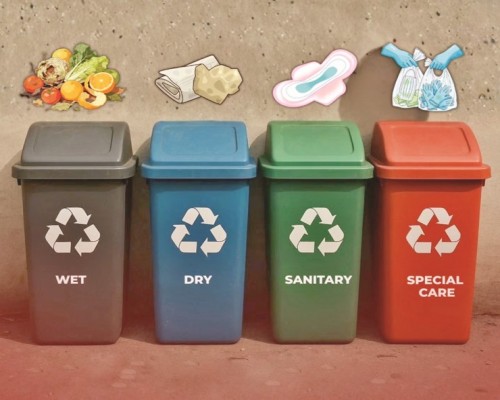
Under the revised framework, waste will no longer be separated only into wet and dry categories. Instead, households, institutions, and commercial establishments will be required to classify waste into four groups: wet waste, dry waste, sanitary waste, and special care waste. The new rules are scheduled to come into effect from April 1, according to an official announcement.
The government has emphasized that waste segregation at the source is essential for improving recycling processes and ensuring safe disposal of hazardous materials. By separating waste before collection, authorities aim to enhance the efficiency of composting, recycling, and waste treatment systems across the country.
Wet waste includes biodegradable materials such as kitchen waste, vegetable and fruit peels, leftover food, meat, flowers, and plant leaves. This type of waste will primarily be processed through composting or bio-processing systems so that it can be converted into organic manure.
Dry waste consists of materials such as plastic, paper, metal, glass, wood, and rubber. These items will be sent to Material Recovery Facilities (MRFs), where they will be sorted and processed for recycling or reuse.
A third category, sanitary waste, includes used diapers, sanitary napkins, tissue paper, masks, tampons, and similar items. These materials require safe packaging and specialized disposal methods to prevent health hazards and environmental contamination.