
Government Strengthens Social Security Net: ESIC, EPFO, and Ayushman Bharat Reforms to Benefit Millions
In a transformative step toward strengthening social security in India, the Ministry of Labour and Employment has introduced a slew of reforms to expand access to healthcare, pensions, and insurance for gig workers and employees covered under ESIC and EPFO. These reforms aim to extend the coverage of welfare schemes, improve accessibility, and ensure that even those outside the traditional workforce receive essential benefits.
Gig Workers to Receive ESIC Health Benefits Without Extra Payment
Gig workers—such as delivery personnel and ride-hailing service partners—will now be eligible for ESIC’s comprehensive health facilities without making any direct contributions. Instead, a portion of the pension contribution made by aggregators on behalf of gig workers will be diverted to the ESIC fund. This decision aligns with the government's broader aim of ensuring social security for over 2.5 crore gig workers by FY 2029-30.
Additional Benefits for Gig Workers under ESIC:
- Medical coverage during unemployment periods (up to 3 months).
- Maternity, disability, and accident insurance.
- Free treatment for gig workers across ESIC hospitals.
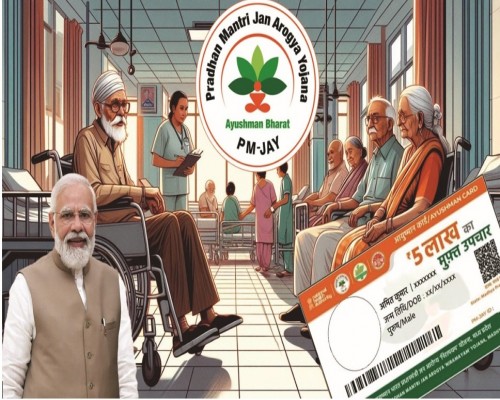
- Access to ₹5 lakh health insurance under schemes integrated with Ayushman Bharat.
ESIC Workers to Access Ayushman Bharat Network Hospitals
In a major boost to healthcare access, the Labour Ministry has finalized a proposal to allow ESIC beneficiaries to seek treatment at over 24,000 hospitals under the Ayushman Bharat scheme. This decision addresses the limited reach of ESIC hospitals in certain regions and is expected to particularly benefit workers in states like Uttar Pradesh, where some districts lack dedicated ESIC hospitals.
- Workers will now be able to avail treatment at nearby empaneled hospitals using their ESIC credentials.
- The move is set to improve health access in 74 districts currently without ESIC hospitals.
- This integration is expected to provide immediate relief to approximately 3.72 crore ESIC beneficiaries.
30 New ESIC Medical Colleges to Be Opened by 2026
To further bolster healthcare infrastructure, ESIC plans to establish 30 new medical colleges across the country within three years. Of these, 10 colleges are expected to be operational by the financial year 2025–26. New institutions will come up in high-demand locations such as Noida, Varanasi, and Delhi’s Narela.
This expansion is expected to:
- Enhance medical education opportunities.
- Improve healthcare delivery in ESIC-managed facilities.
- Train a dedicated healthcare workforce to meet future demand.
EPFO Introduces Digital Access and Demands Pension Increase
In parallel reforms, EPFO is making strides in digital transformation:
- Employees can now create their Universal Account Numbers (UAN) using facial recognition via the UMANG mobile app.
- UAN-linked services are being expanded across 38 districts in Bihar and soon in other states.
- EPFO is also working to allow withdrawals via UPI and simplify claim processes.
A long-standing demand to raise the minimum pension from ₹1,000 to ₹7,500 under EPFO has also gained momentum. Parliamentary panels and trade unions argue that the current pension is inadequate to meet the rising cost of living.