
India Replaces MGNREGA with New Rural Employment Framework, Expands Work Guarantee and Digital Payments
In a major reform aimed at transforming rural employment and strengthening village economies, the Government of India has announced the replacement of the Mahatma Gandhi National Rural Employment Guarantee Act (MGNREGA) with a new programme titled the Viksit Bharat Gramin Rojgar and Aajeevika Mission (G-RAM). The new framework is scheduled to be implemented nationwide from July 1, marking one of the most significant changes to rural employment policy in recent years.
The initiative is being positioned not merely as an employment guarantee programme but as a comprehensive rural development model designed to enhance livelihoods, create durable assets, strengthen local economies, and improve the quality of life in villages across the country.
Expanded Employment Guarantee for Rural Workers
One of the most notable features of the new programme is the expansion of guaranteed employment opportunities for rural households. Under the existing MGNREGA framework, eligible rural families are entitled to 100 days of wage employment annually. The new system proposes increasing this guarantee to 125 days of employment per year, providing an additional 25 days of work to eligible beneficiaries.
Government officials believe that the expanded work guarantee will improve income stability for rural households, increase cash flow in village economies, and strengthen purchasing power among rural communities.
Authorities have clarified that workers currently enrolled under existing employment schemes will automatically be integrated into the new framework, ensuring a smooth transition without disruption of benefits.
Existing Beneficiaries to Be Protected
Officials have emphasized that no eligible worker will lose employment opportunities during the transition period. Existing job cards and records will remain valid until new employment guarantee cards are issued under the revised system.
Workers whose electronic Know Your Customer (e-KYC) verification remains incomplete will also continue to receive employment opportunities while the verification process is completed.
The government has stated that all ongoing projects approved before June 30 will continue under the new framework, ensuring continuity in employment and project implementation.
Focus Shifts from Labour-Intensive Work to Rural Development
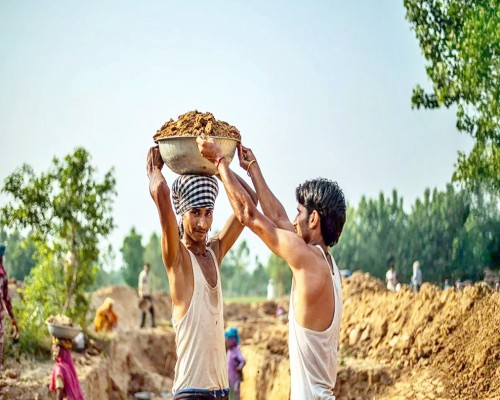
While MGNREGA primarily focused on labour-intensive public works, the new programme aims to broaden the scope of rural employment by linking it more closely with long-term development objectives.
Under the revised framework, priority will be given to projects that contribute directly to rural infrastructure, agricultural productivity, natural resource management, and community development.
Potential areas of focus include:
- Water conservation and watershed management
- Rural roads and connectivity projects
- School and Anganwadi infrastructure
- Agricultural support facilities
- Irrigation and land development projects
- Community assets and public infrastructure
- Climate-resilient rural development initiatives
- Livelihood-supporting local enterprises
Officials have indicated that the programme has been aligned with India's broader development vision and long-term economic goals.
Integration with Self-Help Groups and Farmer Organisations
The new model is expected to encourage greater participation from Self-Help Groups (SHGs), Farmer Producer Organisations (FPOs), and community-based institutions.
Experts believe that linking employment generation with local economic activities can create more sustainable livelihood opportunities and improve rural productivity. The government aims to use the programme not only as a social safety net but also as a tool for rural economic transformation.
This approach is expected to generate long-term assets that contribute directly to agricultural growth, rural entrepreneurship, and community resilience.
Faster and More Transparent Wage Payments
A major reform under the new framework relates to wage disbursement. The government plans to transfer wages directly into workers’ bank accounts through an enhanced digital payment system.
Authorities have set a target of processing wage payments within three days of work completion, although the maximum permissible payment period will remain fifteen days.
To strengthen accountability, provisions are expected to include compensation for delays in wage payments. Workers may become eligible for additional compensation if wages are not credited within the stipulated timeframe.
The government has also proposed provisions for unemployment assistance in cases where eligible workers are unable to obtain employment under the programme.
Record Budget Allocation for Rural Employment
The transition to the new employment framework is accompanied by a substantial increase in financial support. For the financial year 2026–27, the government has proposed an allocation of approximately ₹95,000 crore for the programme.
When combined with state government contributions, total expenditure under the scheme could exceed ₹1.5 lakh crore, making it one of the largest rural employment and development initiatives in the country.
Economists believe the enhanced budget could stimulate rural demand, support local markets, and create a multiplier effect across agriculture, services, and small-scale industries.
A New Phase in Rural Development
Supporters of the reform argue that the new programme has the potential to transform rural employment from a temporary wage-support mechanism into a broader development strategy. By combining employment generation with asset creation, infrastructure development, and livelihood enhancement, the government aims to create a more sustainable model of rural growth.
However, policy experts note that the success of the initiative will depend largely on effective implementation, timely payments, transparency, and the ability of local authorities to identify projects that deliver lasting economic benefits.
As India continues to focus on rural development and inclusive growth, the introduction of the Viksit Bharat Gramin Rojgar and Aajeevika Mission represents an ambitious effort to redefine the role of employment programmes in strengthening village economies and improving livelihoods across the country.