
Inland Waterways Development on 11 Rivers to Transform Transport and Tourism in Uttar Pradesh
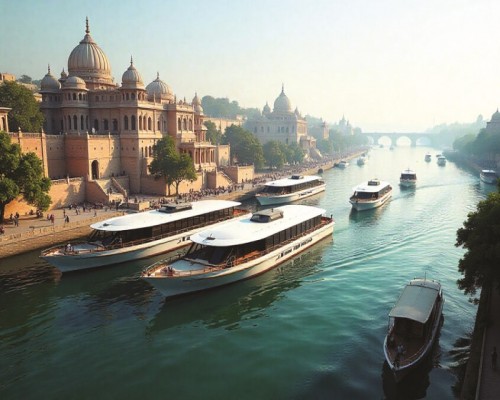
A major initiative is underway to strengthen inland waterway-based transport and tourism across Uttar Pradesh, with navigable routes being developed on 11 rivers across the state. This expansion is expected to significantly reduce logistics costs, improve connectivity, and create new opportunities for trade, tourism, and employment.
Under the national inland waterways programme, 11 rivers in Uttar Pradesh have been identified for development, making the state a key participant in the country’s 111 notified national waterways. The rivers being developed include the Ganga, Yamuna, Ghaghara, Saryu, Gandak, Assi, Betwa, Chambal, Gomti, Karamnasa, and Ken. These waterways are being integrated into a broader transport network aimed at shifting freight movement to more cost-efficient and environmentally sustainable modes.
An important milestone in this process was the first meeting of the Uttar Pradesh Inland Waterways Authority, where experts discussed the prospects, challenges, and implementation strategies for water transport in the state. Officials highlighted that coordinated efforts between the central and state governments would be essential to build navigable depth, terminal infrastructure, and cargo-handling facilities.
At present, inland water transport operations are active on the Ganga River over a stretch of approximately 1,620 kilometres from Varanasi to Haldia in West Bengal. An additional 761 kilometres of waterways are under development, covering rivers such as the Ganga, Yamuna, Saryu, and Gandak. Regular ferry and cargo movement is already being facilitated on selected stretches, while work is progressing to extend operations to other rivers.
Authorities noted that inland waterways offer a significant advantage in terms of logistics efficiency. Cargo movement through rivers is expected to lower freight costs substantially compared to road and rail transport, reducing pressure on highways and cutting emissions. The network will be developed as a multimodal system, integrating waterways with road and rail links to ensure seamless movement of goods.
The development plan also includes the construction of logistics hubs, cold storage facilities, waterway terminals, and inland ports. Services such as river cruises, houseboats, water taxis, and floating restaurants are also being proposed to promote tourism. Religious and heritage cities including Kashi, Prayagraj, Ayodhya, and Mathura will be directly connected through these waterways, enabling easier access for pilgrims and tourists while boosting local economies.
Tourism officials have stated that the new waterway routes will help expand river-based tourism, encourage domestic and international travel, and create employment opportunities in hospitality, transport, and allied services. Private investment is also being encouraged for developing riverfront infrastructure and tourist amenities under state tourism policies.
The long-term vision of the project extends beyond transportation. It is expected that by 2047, large volumes of freight will be shifted to inland waterways, making the movement of heavy goods more affordable and efficient. This transition is projected to significantly reduce logistics costs and ease congestion on road and rail networks.
In a related development, the country’s first hydrogen-powered inland vessel is set to begin operations on the Ganga. The green hydrogen boat will operate between Namami Ghat and Markandeya Dham, symbolizing a move towards clean and sustainable river transport. Designed with a hybrid electric engine, the vessel will have seating for 50 passengers and will run on a fixed daily schedule. Officials have stated that the boat is entirely pollution-free and represents a major step toward eco-friendly water transport. The vessel has been constructed under the “Make in India” initiative at a cost of approximately ₹10 crore.
With infrastructure development, environmental sustainability, tourism promotion, and cost-effective logistics at its core, the inland waterways expansion across Uttar Pradesh marks a transformative phase in the state’s transport ecosystem. The initiative is expected to reshape regional connectivity while contributing to economic growth and environmental conservation.