
Key Labour Law Insights
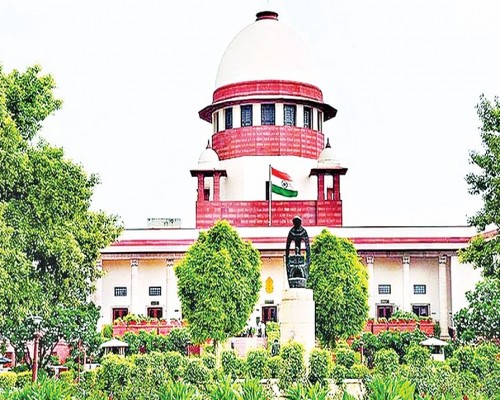
Supreme Court of India
1. Settlement cannot override Certified Standing Orders unless it is more beneficial to workers
Case: Bharatiya Kamgar Karmachari Mahasangh v. M/s Jet Airways Ltd., 2023, Supreme Court
The Supreme Court held that Certified Standing Orders have binding legal force and cannot be ignored through a settlement between the employer and workers.
A settlement may be accepted only when it gives employees better or more beneficial terms. If a settlement reduces or weakens the rights already available under the Certified Standing Orders, it cannot override them.
Haryana
2. Abandonment of service cannot be presumed without calling the workman back to duty
Case: Vijay Singh v. Presiding Officer, Industrial Tribunal-cum-Labour Court-3, Faridabad, 2017, Punjab & Haryana High Court
The Court held that an employer cannot simply presume that a workman has abandoned his job. If an employee remains absent, the employer must issue letters or notices asking the employee to report for duty.
Without such communication, treating the employee as having abandoned service is not legally sustainable. The employer must show that reasonable opportunity was given to the workman to return.
Punjab / Chandigarh
3. Enquiry officer’s bias can make the domestic enquiry defective
Case: M/s Groz Beckert Asia Pvt. Ltd. v. Presiding Officer, Industrial Tribunal & Labour Court, Chandigarh and Another, 2019, Punjab & Haryana High Court
The Court observed that fairness is the backbone of every domestic enquiry. If the enquiry officer is personally close to the management, such as being a friend of the Factory Manager, and has earlier conducted enquiries against workmen, an impression of bias may arise.
Even if actual bias is not proved, the possibility of bias can affect the legality of the enquiry.
4. No disciplinary enquiry is required for ending contractual employment as per contract
Case: Baljeet Singh v. Industrial Tribunal, Bathinda and Others, 2018, Punjab & Haryana High Court
The Court held that where an employee is engaged on a contractual basis and the contract comes to an end according to its terms, the employer is not required to conduct a disciplinary enquiry.
A clear distinction must be made between punitive termination and simple non-renewal or termination under the contract.
Maharashtra
5. Full back wages may be justified when employer delays the proceedings
Case: Jalna District Central Co-Operative Bank Ltd. v. Manik S/o Ambadas Toge, 2023, Bombay High Court
The Court held that where reinstatement is ordered and the employer is responsible for delaying the legal proceedings, grant of full back wages may be justified.
An employee should not suffer financially merely because the employer prolonged the dispute.
6. Gratuity forfeiture requires clear charge of moral turpitude
Case: Chairman/Chief Executive Officer, Sangli District Primary Teachers Co-op. Bank Ltd. v. Babasaheb Mahadev Patil, Sangli, 2021, Bombay High Court
The Court held that gratuity cannot be forfeited casually. If the employer wants to forfeit gratuity on the ground of moral turpitude, the charge-sheet itself must specifically mention the allegation and provide proper basis for such action.
Without a clear charge, forfeiture of gratuity may not stand.
7. Strike in public utility services can be restrained by Court
Case: Bharat Petroleum Corporation Ltd. v. Petroleum Workmen’s Union and Others, 2020, Bombay High Court
The Court held that where a strike affects public utility services, the Civil Court or High Court can intervene and restrain such strike.
The right to protest or strike is not absolute, particularly when essential services and public interest are involved.
8. Sexual harassment penalty based on evidence should not be lightly interfered with
Case: Vidya Akhave v. Union of India, Department of Women and Children & Others, 2017, Bombay High Court
The Court held that once allegations of sexual harassment are examined through proper procedure and the penalty is based on evidence, courts should not interfere lightly.
The decision of the competent authority will generally be respected if the enquiry is fair and supported by material evidence.
Uttar Pradesh
9. Apprentice cannot raise an industrial dispute like a regular employee
Case: U.P. State Electricity Board, Kanpur v. Presiding Officer, Labour Court IV, U.P., Kanpur, 2017, Allahabad High Court
The Court held that an apprentice is not the same as a regular workman. Therefore, an apprentice cannot raise a dispute before the industrial adjudicator in the same manner as an employee.
The relationship of apprenticeship is primarily for training and not regular employment.
Karnataka
10. Employer can claim damages if employee breaches service undertaking
Case: Mr. Yeshwant Raghunath Mulay v. M/s Motor Industries Company Limited, 2020, Karnataka High Court
The Court held that where an employee gives an undertaking to serve for a particular period and then violates that undertaking, the employer may be justified in claiming damages.
Such damages must be based on the terms of the undertaking and the loss suffered by the employer.
11. Embezzlement destroys confidence and does not deserve sympathy
Case: M/s Sri Gajanna Motor Transport Co. Ltd. v. Mallesh, 2021, Karnataka High Court
The Court observed that embezzlement is a serious misconduct because it directly affects the trust between employer and employee. Once confidence is lost due to financial dishonesty, sympathy is not normally justified.
The Court recognised that integrity is essential in employment, especially where money or property is handled.
12. Factory Inspector cannot prosecute Director without considering reply to notice
Case: Sri Natarajan S. v. State of Karnataka and Others, 2022, Karnataka High Court
The Court held that if a Director submits a reply to a notice issued by the Factory Inspector, the authority must consider and decide that reply before launching prosecution.
Prosecution without dealing with the reply may not be legally sustainable.
Bihar
13. Gate passes alone do not prove contractor workers are employees of principal employer
Case: Indian Oil Corporation Ltd., Barauni v. The Union of India, 2018, Patna High Court
The Court held that mere issuance of gate passes to contractor workers does not automatically make them employees of the principal employer.
Gate passes are generally issued for entry, security and access control. They do not by themselves prove direct employment.
Delhi
14. Conditions of service cannot be changed without 21 days’ notice
Case: A. Radhika v. M/s Wishwa Prakashan Publishers and Exports Pvt. Ltd., 2023, Delhi High Court
The Court held that an employer cannot change service conditions suddenly. Where law requires notice of change, the employer must give 21 days’ notice before altering conditions of service.
This protects employees from sudden and unilateral changes affecting their employment rights.
15. Approval for dismissal can be refused if enquiry is defective
Case: Delhi Transport Corporation v. Rajbir Singh, 2019, Delhi High Court
The Court held that if the domestic enquiry is vitiated or defective, the authority may rightly reject the employer’s application seeking approval of dismissal.
A dismissal order cannot stand merely because misconduct is alleged. The process must also be legally fair.
16. Tribunal cannot interfere with punishment without specific reasons
Case: Punjab National Bank v. Smt. Sneh Aggarwal, 2023, Delhi High Court
The Court held that a Tribunal cannot reduce or interfere with the punishment imposed by the employer unless it records clear and specific reasons.
The Tribunal must explain why the punishment is excessive, disproportionate or unjustified.
17. Maternity benefits may not extend beyond contractual employment period
Case: Dr. Artiben R. Thakkar v. Delhi Pharmaceutical Sciences & Research University, 2018, Delhi High Court
The Court held that extended maternity benefits cannot be claimed after the contractual employment period has already come to an end.
The rights of a contractual employee are subject to the period and terms of the contract, unless law provides otherwise.
18. New contractor may be required to engage workers of outgoing contractor
Case: Central Warehousing Corporation v. Government of India and Others, 2021, Delhi High Court
The Court held that in appropriate circumstances, the incoming contractor may be obliged to engage the workers of the outgoing contractor.
This protects continuity of employment where contractual arrangements or statutory conditions require such protection.
Tamil Nadu
19. Workers’ right to demonstrate is subject to reasonable restrictions
Case: Chennai Yetrumathi Valaga Uzhiyargal Matrum Podhu Thozhilalar Sangam v. Commissioner of Labour, Chennai and Others, 2019, Madras High Court
The Court held that workers have a right to demonstrate, but that right is not unlimited. Demonstrations must remain peaceful and must follow reasonable restrictions imposed in the interest of law, order and business operations.
The right to protest cannot become a right to obstruct.
20. Repeated misappropriation of public money justifies dismissal
Case: Management, Tamil Nadu State Transport Corporation (Villupuram) Ltd. v. Presiding Officer-I and Another, 2020, Madras High Court
The Court held that dismissal from service is not disproportionate when the employee is repeatedly involved in misappropriation of public money.
Misappropriation in public service is a serious act of misconduct because it affects public trust.
21. International workers are covered under EPF in absence of Social Security Agreement
Case: Loyal Textile Mills Limited v. Regional Provident Fund Commissioner, EPFO, 2020, Madras High Court
The Court held that international workers are covered under EPF where there is no Social Security Agreement between India and the worker’s country.
In such cases, exemption cannot be claimed merely because the employee is a foreign national.
22. Termination for absence may be invalid if employee had applied for leave
Case: The Director, Hindustan Institute of Engineering & Technology, Chennai v. The Presiding Officer, III Additional Labour Court and Another, 2022, Madras High Court
The Court held that terminating an Accounts Officer for absence was not justified where the employee had applied for leave.
The employer must examine the facts properly before taking harsh action. Absence is not always misconduct if leave was applied for and circumstances were explained.
Puducherry
23. Compensation not payable when accident occurs outside factory during lunch hours
Case: Regional Director, E.S.I.C., Pondicherry v. Chinnathambi, 2019, Madras High Court
The Court held that compensation was not payable where the accident took place outside the factory premises during lunch hours.
The accident must have a clear connection with employment to attract compensation liability.
24. Ex-gratia payment is not always bonus
Case: Managing Director, Vinayaka Missions Medical College and Hospital v. Presiding Officer, Industrial Tribunal-cum-Labour Court, Puducherry and Another, 2019, Madras High Court
The Court held that every ex-gratia payment cannot automatically be treated as bonus.
Ex-gratia is generally a voluntary payment, while bonus has statutory meaning and conditions. The nature of payment depends on the facts, records and intention behind it.
West Bengal
25. Independent firms cannot be clubbed merely for EPF coverage
Case: Muramen Travels v. Regional Provident Fund Commissioner, West Bengal and Others, 2023, Calcutta High Court
The Court held that two independent firms having separate PAN numbers and separate bank accounts cannot be clubbed together without proper basis.
Common ownership or business connection alone may not be enough if the establishments are legally and financially separate.
26. EPF damages order must be a speaking order
Case: Tirrihannah Company Ltd. v. Regional Provident Fund Commissioner, 2018, Calcutta High Court
The Court held that an order imposing damages must contain reasons. If the authority does not pass a speaking order, the matter may be sent back for fresh consideration.
A reasoned order is necessary so that the employer knows why damages have been imposed.
27. Gratuity authority cannot interfere with employer’s punishment
Case: State Bank of India and Others v. Ratan Kumar Rababi and Others, 2022, Calcutta High Court
The Court held that the Appellate Authority under the gratuity law is not empowered to interfere with the punishment imposed by the employer.
The authority’s role is limited to issues relating to gratuity and not to sit as an appellate forum over disciplinary punishment.
Chhattisgarh
28. ESI coverage must be decided after proper examination of records
Case: Kashinath and Sons v. Employees’ State Insurance Corporation and Another, 2019, Chhattisgarh High Court
The Court held that an establishment cannot be covered under ESI without properly examining relevant records.
If coverage is decided without proper verification, the matter may require fresh consideration.
Madhya Pradesh
29. Overtime is payable for work done on holidays and rest days
Case: Ziqitza Health Care Ltd. and Others v. Rakesh Singh and Others, 2020, Madhya Pradesh High Court
The Court held that employees who work on holidays or rest days are entitled to overtime payment as per law.
An employer cannot take work on weekly off or holidays without compensating employees properly.
30. Resignation must be submitted to the proper authority
Case: Depot Manager, IOCL and Others v. Vidyawati Ramswaroop Verma and Others, 2023, Madhya Pradesh High Court
The Court held that resignation must be submitted to the concerned or competent authority.
If resignation is not given to the proper authority, action based on such resignation may not be justified.
31. Transferable employee cannot insist on staying at one place
Case: Intas Pharmaceuticals Ltd. and Another v. Yogendra Singh Chouhan, 2021, Madhya Pradesh High Court
The Court held that an employee holding a transferable post cannot demand to remain posted at a particular place.
Transfer is generally an incident of service unless it is mala fide, punitive or contrary to contract.
Telangana
32. Transferee by operation of law may not be liable for previous EPF dues
Case: M/s A.I. Potia and Co. v. Union of India, 2022, Telangana High Court
The Court held that a transferee who gets possession of property by operation of law may not automatically be liable to pay previous EPF dues.
Liability depends on the nature of transfer, legal provisions and facts of possession.
Assam / Gauhati Jurisdiction
33. Suspension before inquiry report in sexual harassment case may be untenable
Case: Ananta Prasad v. Gauhati High Court and Others, 2020, Gauhati High Court
The Court held that suspending an employee as guilty of sexual harassment before receiving the inquiry report was not sustainable.
An employee cannot be treated as guilty before the inquiry process is completed and findings are properly recorded.