

Lok Sabha Approves Bill to Repeal 71 Obsolete Laws, Streamlining India’s Legal Framework
The Lok Sabha has approved a legislative bill aimed at repealing 71 outdated and redundant laws, marking another significant step toward simplifying India’s legal system. The move forms part of the government’s broader effort to eliminate colonial-era provisions and remove statutes that have become irrelevant, contradictory, or administratively burdensome.
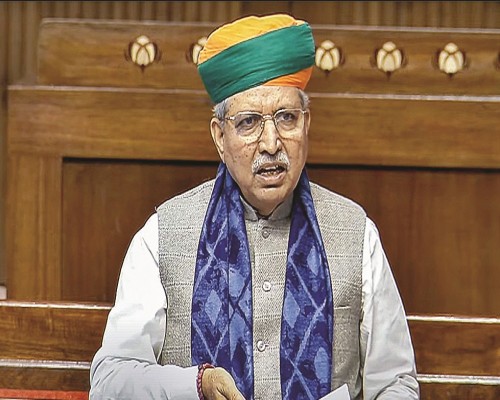
Introducing the bill, Law Minister Arjun Ram Meghwal stated that the objective of the proposed legislation is to make the legal framework simpler, more accessible, and more citizen-friendly. He emphasised that the repeal of obsolete laws would reduce legal complexity, remove ambiguities, and strengthen ease of governance. The initiative also aligns with the government’s long-standing policy of modernising the country’s statute books.
Since 2014, the government has undertaken a systematic review of existing laws, focusing on eliminating archaic, overlapping, or unused provisions inherited from earlier eras. As part of this process, a total of 1,562 outdated and defunct laws have already been repealed. With the passage of the current bill, the number of repealed statutes will rise further, reinforcing the objective of building a transparent, efficient, and responsive legal system.
Responding to the brief discussion in the House, the Law Minister explained that the proposed bill seeks to remove laws that no longer serve any functional purpose, correct procedural irregularities that arose during the drafting of earlier legislation, and eliminate discriminatory or unnecessary provisions. He stated that such legislative housekeeping is essential to ensure that citizens are governed only by relevant and rational laws.
Among the 71 Acts proposed for repeal are several colonial-era and sector-specific statutes that have lost practical relevance in modern governance. These include the Indian Tramways Act, 1886, the Levy Sugar Price Equalisation Fund Act, 1976, and the Bharat Petroleum Corporation Limited (Determination of Conditions of Service of Employees) Act, 1988, among others. The bill also proposes amendments to certain provisions under the Disaster Management Act, 2005, aimed at improving clarity and operational effectiveness.
The minister further highlighted that the reform process is intended not merely to reduce the number of laws, but to improve the quality of legislation. By removing obsolete statutes and outdated administrative frameworks, the government seeks to ensure that India’s legal system reflects contemporary social realities, constitutional values, and economic priorities.
Legal experts note that the repeal of unnecessary laws reduces compliance burdens on citizens and businesses, lowers the risk of misinterpretation, and enhances institutional efficiency. It also helps eliminate inconsistencies that arise when multiple laws govern the same subject matter, thereby strengthening the rule of law.
With Parliament continuing its effort to review and rationalise the statute book, the passage of this bill represents another milestone in the long-term project of legal reform. By systematically removing redundant legislation, the government aims to create a clearer, more modern, and more accessible legal framework that supports governance, economic activity, and the rights of citizens.