

Padma Shri Dr. Bashir Badr: The Voice of Modern Urdu Poetry Falls Silent, Leaving Behind a Timeless Legacy
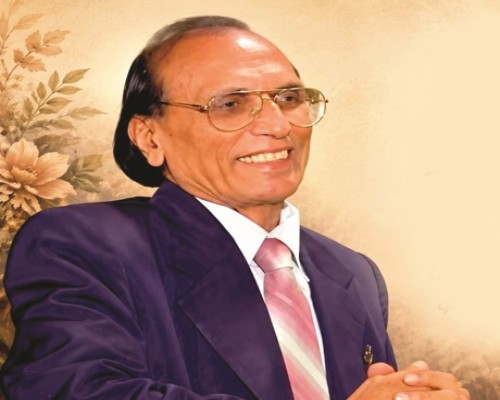
The world of literature mourned the passing of renowned Urdu poet and Padma Shri awardee Dr. Bashir Badr, whose ghazals gave a new voice to love, longing, memory, and the complexities of human relationships. Revered for bringing Urdu poetry closer to the common reader, Dr. Badr left an indelible mark on Indian literature through verses that transcended generations and linguistic boundaries.
Dr. Bashir Badr passed away at the age of 91 at his residence in Bhopal. He had been battling age-related ailments, including dementia, for a considerable period. His demise marked the end of an era in contemporary Urdu poetry, but his literary contributions continue to resonate with millions of admirers across India and beyond.
Born on February 15, 1935, in Ayodhya, Dr. Badr pursued higher education at Aligarh Muslim University and later embarked on an academic career that would shape his literary journey. He joined Meerut College as a lecturer and served there for nearly 17 years. During his tenure, he eventually became the Head of the Urdu Department, playing a significant role in promoting Urdu literature and mentoring young scholars.
Meerut occupied a special place in Dr. Badr’s life and literary evolution. It was in this city that he developed his distinctive poetic style, blending traditional Urdu expression with elements of Hindi and everyday language. His approach made Urdu poetry more accessible and relatable to a broader audience, helping popularize the genre among readers who were previously unfamiliar with its nuances.
Many of his most celebrated ghazals emerged during his years in Meerut. His poetry reflected themes of love, separation, memory, loss, and resilience, often expressed through simple yet deeply evocative language. Verses such as “UjaleApni Yaadon Ke Hamare Saath Rehne Do, Na Jaane Kis Gali Mein Zindagi Ki Shaam Ho Jaaye” became timeless expressions of human emotion and remain widely quoted even today.
A turning point in his life came during the communal unrest of 1987, when his house in Meerut was destroyed in a fire. The tragedy left a profound impact on the poet and found reflection in several of his writings. Following the incident, he relocated to Bhopal in 1988 along with his family. Despite the displacement, he continued to write and remained one of the most influential voices in Urdu literature.
The pain of losing his home was immortalized in some of his poignant verses. One of his well-known lines lamented the destruction caused by violence and highlighted the emotional devastation experienced by those who lose their homes and memories. Such poetry elevated personal suffering into a universal commentary on human conflict and displacement.
Throughout his literary career, Dr. Badr received numerous honours and accolades. His contribution to Urdu literature earned him widespread recognition, culminating in the conferment of the Padma Shri, one of India’s highest civilian awards. He was also associated with various literary and cultural institutions and played an important role in promoting Urdu language and poetry at the national level.
Although he spent his later years in Bhopal, his connection with Meerut remained deeply cherished. Literary circles in the city continued to remember him as one of their most distinguished former faculty members and a poet whose creativity flourished during his years there. His former colleagues and admirers often recalled his warmth, intellectual depth, and extraordinary command over language.
His last known visit to Meerut took place during a literary event where he was honoured for his contribution to poetry and literature. The occasion served as a reminder of the enduring bond between the poet and the city that helped shape his literary identity.
Dr. Bashir Badr’s poetry stands as a bridge between classical Urdu traditions and contemporary sensibilities. Through his work, he demonstrated that profound emotions could be expressed in simple language without losing their artistic depth. His ghazals continue to be recited in literary gatherings, quoted in popular culture, and cherished by readers across generations.
With his passing, Indian literature has lost one of its most beloved poetic voices. Yet, the legacy of Dr. Bashir Badr endures through the countless verses that continue to inspire reflection, comfort, and emotional connection. His words remain alive in the hearts of readers, ensuring that his contribution to literature will be remembered for generations to come.