

Piyush Goyal Announces Duty Relief on Harley-Davidson Imports; 3000cc Cars to Become More Affordable
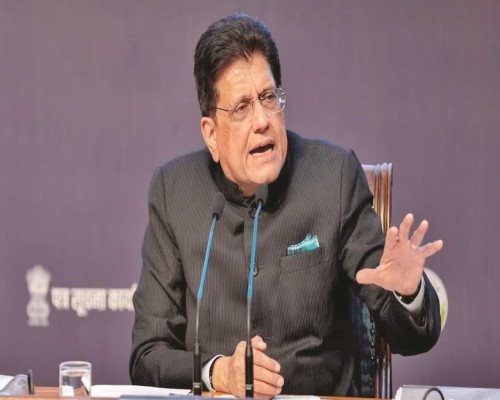
India has announced significant tariff adjustments as part of its evolving trade framework with the United States, a move expected to impact automobile imports and expand bilateral trade opportunities.
Union Commerce and Industry Minister Piyush Goyal stated that India’s trade engagement with the United States positions the country competitively against exporters such as China, Indonesia, Bangladesh, and Vietnam, which face tariffs exceeding 18 percent in the American market. He expressed confidence that India’s exports to the United States could see substantial growth, potentially reaching $300 billion in the near future.
As part of the tariff revisions, India has eliminated import duties on certain categories of motorcycles manufactured in the United States, including high-capacity bikes such as those produced by Harley-Davidson with engine capacities ranging between 800cc and 1500cc. Previously, such imports were subject to duties of up to 50 percent.
In addition, customs duties on imported cars with engine capacities of 3000cc have been reduced in a phased manner to 30 percent. This reduction is expected to make high-end vehicles more affordable for Indian consumers. However, the government has clarified that no similar relief has been extended to electric vehicle imports.
The revised trade terms also include adjustments in agricultural imports. While certain relaxations have been provided on products such as cotton, apples, and soybean oil, specific conditions apply. For instance, the import of American apples is subject to a minimum price threshold—set at ₹80 per kilogram along with a 25 percent duty—effectively preventing imports below ₹100 per kilogram.
Beyond automobiles and agriculture, the agreement is expected to strengthen cooperation in technology and advanced manufacturing sectors. India is anticipated to expand exports of computer-related products, semiconductor equipment, medical devices used in organ diagnostics such as heart and lung equipment, and semiconductor chips.
The tariff revisions reflect a calibrated approach aimed at balancing domestic industry protection with enhanced bilateral trade. While easing duties in select sectors, the government has maintained safeguards in strategic areas such as electric vehicles and price-sensitive agricultural commodities.
Overall, the adjustments signal a broader strategy to deepen trade relations with the United States while supporting India’s export growth and ensuring competitive access to global markets.