
Russia Offers Advanced Su-57 Fighter Jet Partnership to India
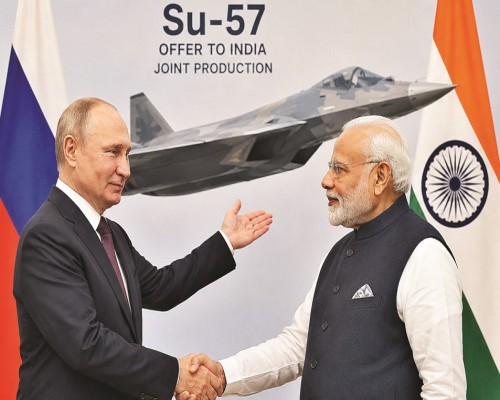
Proposal Includes Potential Joint Production and Expanded Strategic Cooperation in Defence Manufacturing
In a major development in India–Russia defence relations, Russian President Vladimir Putin has reportedly offered India the opportunity to acquire and potentially participate in the production of the fifth-generation Su-57 stealth fighter aircraft. The proposal reflects Moscow’s continued interest in deepening strategic and defence cooperation with New Delhi while expanding collaboration in advanced military technologies.
The offer comes at a time when India is actively pursuing the modernization of its armed forces and evaluating next-generation combat platforms capable of strengthening its air power capabilities in an increasingly complex security environment.
Su-57: Russia’s Fifth-Generation Stealth Fighter
The Su-57 is Russia’s most advanced fifth-generation multirole combat aircraft, designed to perform a wide range of missions including air superiority, ground attack, and electronic warfare. The aircraft incorporates stealth technology, advanced avionics, high maneuverability, and sophisticated weapon systems intended to compete with other fifth-generation fighter platforms operating globally.
Defence experts describe the aircraft as a highly agile combat platform capable of executing complex aerial maneuvers and engaging multiple targets simultaneously. The fighter is equipped with advanced radar and sensor systems designed to enhance situational awareness and combat effectiveness.
One of the aircraft’s key features is its stealth-oriented design, which seeks to reduce its radar signature and improve survivability in contested airspace. The aircraft is also capable of carrying a broad range of air-to-air and air-to-ground weapons.
Possibility of Manufacturing in India
A significant aspect of the Russian proposal is the possibility of local manufacturing or joint production in India. Reports indicate that Russia has expressed willingness to explore industrial cooperation under which components or complete aircraft could be produced in partnership with Indian defence and aerospace entities.
Such an arrangement would align with India’s broader objective of strengthening indigenous defence manufacturing under initiatives aimed at increasing self-reliance in the defence sector. Local production could also facilitate technology transfer, skill development, and the expansion of India’s aerospace manufacturing ecosystem.
Defence analysts note that any future collaboration would require detailed negotiations regarding technology sharing, production responsibilities, costs, maintenance support, and long-term operational requirements.
Strengthening India–Russia Defence Ties
India and Russia have maintained a longstanding defence relationship spanning several decades. Russian-origin equipment continues to form an important component of India's military inventory, including fighter aircraft, submarines, tanks, missile systems, and air defence platforms.
The two countries have also successfully collaborated on several major defence projects in the past. Strategic cooperation has included joint research, development, production, and technology-sharing initiatives that have contributed to strengthening bilateral ties.
Russian officials have emphasized that defence cooperation remains a central pillar of the broader strategic partnership between the two nations.
India’s Pursuit of Advanced Air Power
The proposal arrives as India continues to evaluate future requirements for its air force and explores options for enhancing its next-generation combat capabilities. Modern aerial warfare increasingly demands aircraft capable of operating in highly contested environments while integrating advanced sensors, networking technologies, and precision weapon systems.
India is simultaneously pursuing indigenous fighter development programs and assessing international defence partnerships that could complement domestic efforts. Experts believe that any decision regarding advanced combat aircraft acquisition would involve careful consideration of operational needs, technological benefits, lifecycle costs, and strategic objectives.
Russia Reaffirms Independent Foreign Policy Relations
During discussions related to bilateral relations, Russian leadership also emphasized the independent nature of India’s foreign policy and highlighted the historical depth of ties between the two countries. Russian officials reiterated their commitment to expanding cooperation across defence, technology, energy, and economic sectors.
Observers note that despite changing global geopolitical dynamics, India and Russia continue to maintain regular diplomatic and strategic engagement. Defence cooperation remains one of the most significant components of this relationship.
Strategic Implications for the Region
If pursued, collaboration involving the Su-57 could have important implications for regional defence dynamics and aerospace cooperation. The introduction of a fifth-generation stealth fighter into India's military inventory would represent a significant enhancement of air combat capabilities and could influence future defence planning in the region.
However, defence experts caution that any potential agreement would likely require extensive technical evaluations, financial assessments, and strategic reviews before a final decision is reached.
For now, the Russian offer represents another important chapter in the evolving defence partnership between the two nations and underscores the growing significance of advanced aerospace technologies in shaping future military capabilities.