

The Vanishing Forests: 10 Million Hectares Lost Every Year, Threatening the Earth’s Lungs
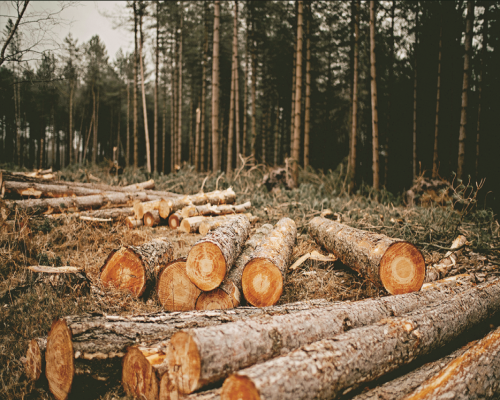
FAO’s Global Forest Resources Assessment 2025 warns of rapid deforestation and climate imbalance
Despite global conservation efforts, the world continues to lose forests at an alarming rate. A new report by the Food and Agriculture Organization (FAO) — the Global Forest Resources Assessment 2025 — reveals that 1.09 crore hectares (10.9 million hectares) of forests are destroyed globally every year. This loss is equivalent to the entire landmass of Egypt or the U.S. state of Texas.
According to the report, forests now cover about 4.14 billion hectares, accounting for nearly one-third of Earth’s land area. However, rampant deforestation driven by agriculture, urban expansion, and wildfires is placing immense pressure on biodiversity and the planet’s ecological balance.
Forest Fires and Human Activity Exacerbate the Crisis
FAO’s data shows that 261 million hectares of land are affected annually by forest fires. In 2020 alone, wildfires destroyed 41 million hectares of forest cover — most severely impacting tropical and sub-tropical regions. Experts caution that this trend may worsen with global warming, resulting in higher carbon emissions and further climate instability.
“Around 92% of the world’s forests are natural, but every year we are witnessing their decline due to agricultural expansion and commercial logging,” the report states.
Between 1990 and 2020, the world lost 324 million hectares of forest cover. Although the rate of loss has slowed since 2015, the annual decline remains high — nearly 10.9 million hectares per year on average.
The Expanding Protected Areas Offer Hope
There is, however, a glimmer of optimism. The FAO report notes that the total area of legally protected and managed forests has increased by nearly 251 million hectares since 1990, now covering 20% of the world’s forests (about 813 million hectares).
Protected zones and biodiversity reserves have expanded across Africa, Asia, and Latin America, with nations like India, Brazil, and Indonesia introducing stronger legal frameworks for forest conservation.
Currently, 2.13 billion hectares of global forest area is under some form of long-term management — focusing on sustainable use, community forestry, and ecological restoration.
Forests: The Planet’s Carbon Buffer
Forests act as a massive carbon sink, absorbing an estimated 2.6 billion tonnes of CO₂ annually. However, ongoing deforestation and degradation threaten this natural climate buffer. Since 1990, the Earth has lost nearly 32% of its original forest biomass, reducing the planet’s ability to absorb greenhouse gases and regulate temperature.
Experts warn that if the current trajectory continues, deforestation will erase an area equivalent to the size of South Africa by 2050 — pushing the planet closer to irreversible ecological tipping points.
A Call for Global Action
The FAO urges all nations to accelerate forest restoration under international frameworks such as the UN Decade on Ecosystem Restoration (2021–2030) and the Paris Climate Agreement. It stresses the need for stronger implementation of reforestation programs, greater indigenous participation, and stricter regulation of commercial land use.
“Forests are the Earth’s lungs. Every hectare lost is a breath taken away from future generations,” the report concludes.