

Trump’s Ceasefire Flip-Flop Deepens Iran Crisis
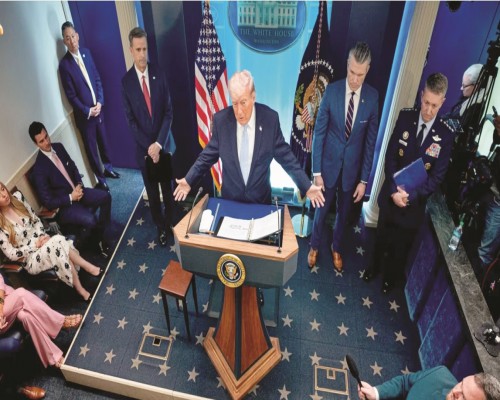
The world welcomed the ceasefire with relief, but Donald Trump’s shifting stance has once again pushed the fragile US-Iran truce into uncertainty
For a brief moment, the world believed a wider war had been avoided. The announcement of a two-week ceasefire between the United States and Iran sparked relief across global capitals and financial markets. Stock markets rose, oil prices softened, and investors saw the truce as a sign that one of the world’s most dangerous conflicts might finally calm down.
But that optimism is already fading.
The biggest reason is the rapidly changing stance of Donald Trump, whose public position on the war and ceasefire has shifted repeatedly in just a few days. Trump moved from threatening Iran with severe consequences, to praising the ceasefire as a success, and then once again taking a harder line by rejecting Iranian expectations and signaling pressure instead of stability.
This has created a serious credibility problem.
In a conflict of this scale, involving regional security, oil routes, and military alliances, consistency matters. A ceasefire can only survive if both sides believe the political terms around it are stable. But Trump’s repeated change in tone has made the truce look less like a serious peace effort and more like an unstable political announcement.
Iran is clearly unhappy with this approach. Tehran had expected that the ceasefire would open the door to meaningful negotiations and a balanced diplomatic process. Instead, it now appears to see Washington shifting the terms after already declaring success.
That frustration has made the ceasefire even more fragile.
The early market rally and global celebration showed how badly the world wanted peace. But peace cannot survive on headlines alone. It needs trust, clarity, and consistent diplomacy.
Right now, the world is once again being forced to confront an uncomfortable reality: Donald Trump’s unpredictable approach is not reducing uncertainty—it is becoming one of the main reasons the ceasefire itself is now at risk.