

Twelve-Year-Old American Student Builds Nuclear Fusion Reactor, Draws Global Attention
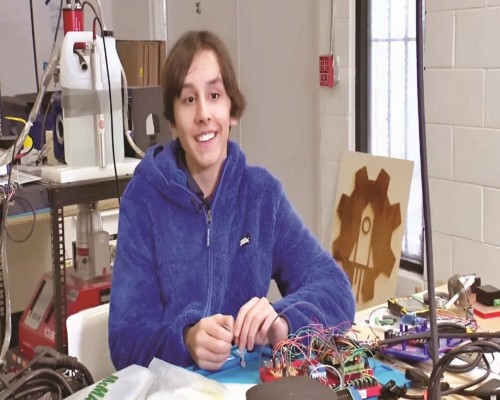
A 12-year-old student from the United States has captured global attention after successfully building a nuclear fusion reactor at a remarkably young age. The achievement has drawn widespread interest in the scientific community and may place the young innovator on track to set a world record.
The student, Jackson McMillan, who lives in Dallas, demonstrated exceptional scientific curiosity and technical ability by constructing a functioning nuclear fusion device while still in middle school. The project has surprised experts and observers alike, highlighting the remarkable potential of young minds when provided with access to knowledge and resources.
McMillan is currently a seventh-grade student in the Dallas Independent School District. His work has gained recognition internationally, and reports suggest that his accomplishment may soon be considered for inclusion in the Guinness World Records for being among the youngest individuals to build such a complex scientific device.
According to reports, McMillan’s interest in nuclear science began at an early age. He reportedly started exploring the concept of nuclear fusion when he was about eight years old. Over the following years, he devoted considerable time to studying nuclear physics and understanding the theoretical principles behind fusion reactions.
Before constructing the reactor, the young student spent nearly two years studying nuclear physics and the science of fusion energy. During this period, he focused on learning about the processes that allow atomic nuclei to combine and release energy—a phenomenon that powers stars, including the Sun.
After developing a solid understanding of the scientific concepts involved, McMillan began collecting the materials and components required to build the experimental device. The project required significant research, careful planning, and the assembly of specialized equipment.
Nuclear fusion reactors aim to replicate the energy-producing process that occurs naturally inside stars. In such reactions, two atomic nuclei combine under extremely high temperatures and pressures to form a heavier nucleus, releasing large amounts of energy in the process. Scientists around the world are actively researching fusion energy as a potential source of clean and nearly limitless power.
While McMillan’s reactor is experimental and built for educational and demonstration purposes, the achievement has sparked widespread admiration. Experts note that constructing even a small-scale fusion device requires substantial knowledge of physics, engineering, and safety considerations.
Observers believe the accomplishment demonstrates how early exposure to scientific learning can inspire innovation among young students. The story has also reignited discussions about encouraging science education and research opportunities for school-age children.
If formally recognized, McMillan’s achievement could place him among the youngest individuals to build a nuclear fusion reactor, potentially earning a place in international record books.
The young student’s project serves as a reminder that curiosity, dedication, and access to learning resources can enable extraordinary achievements—even at a very young age.