

U.S. Urged India to Purchase Russian Oil Amid Supply Concerns, Says Official
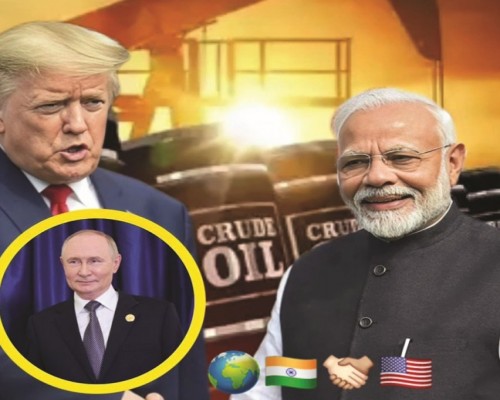
Amid growing tensions in global energy markets and fears of supply disruptions, the United States had urged India to continue purchasing Russian oil under a temporary arrangement, according to statements attributed to senior American officials. The move was described as a pragmatic and time-bound decision intended to maintain stability in international oil prices and prevent a sudden supply shock.
The development comes at a time when geopolitical tensions in West Asia and Eastern Europe have placed significant pressure on global energy supply chains. With crude oil markets witnessing volatility and price fluctuations, major economies have been compelled to adopt flexible and, at times, unconventional strategies to ensure continuity in fuel availability.
Temporary Measure to Stabilise Markets
According to U.S. Energy Secretary Jennifer Granholm, the decision to allow or encourage continued purchases of Russian crude was not a long-term policy shift but rather a temporary measure designed to prevent abrupt disruptions in supply. The arrangement reportedly allowed India a limited window—around 30 days—to continue sourcing oil that was already in transit or stored in maritime cargo shipments.
Officials indicated that this approach was aimed at ensuring that oil already present in the global supply chain could be efficiently redirected to refineries rather than being stranded, which could have triggered further instability in prices.
Coordination with Indian Authorities
The U.S. administration confirmed that discussions had taken place with Indian authorities regarding the continuation of Russian oil imports under specific conditions. The intent, according to officials, was to balance geopolitical considerations with economic realities, particularly given India’s dependence on imported crude to meet its energy demands.
The policy was framed as a practical response to exceptional circumstances, rather than a departure from the broader strategic stance toward Russia. It was emphasised that facilitating the movement of already available oil shipments could help moderate price volatility and ease supply constraints in the short term.
Strategic and Political Debate in India
The issue has sparked discussion within India, with political stakeholders examining the implications of continuing Russian oil imports under external influence. Questions have been raised regarding the long-term impact on India’s foreign policy positioning, as well as its commitment to maintaining strategic autonomy in global trade decisions.
At the same time, economic considerations remain central to the debate. Affordable crude imports are critical for sustaining industrial activity, controlling inflation, and ensuring energy security in a rapidly growing economy.
Logistical and Market Considerations
Industry experts have noted that large volumes of Russian crude were already in transit via maritime routes or stored in offshore tankers. Redirecting these supplies to Indian refineries was seen as a practical step to prevent bottlenecks in the global oil trade.
Transporting and unloading such shipments involves complex logistical coordination, often taking several weeks. By permitting these transactions to proceed, market disruptions could be minimised and the availability of crude oil in refining hubs maintained.
U.S. Position: No Shift in Broader Policy
American officials have reiterated that the move does not signal any fundamental change in their broader policy stance regarding Russia. Instead, it reflects a calibrated response to evolving market dynamics, where stabilising energy prices has been prioritised to avoid further economic strain on global markets.
The U.S. administration has maintained that managing inflationary pressures and ensuring energy availability remain critical objectives, particularly in a volatile geopolitical environment.
Outlook for Global Energy Markets
The situation highlights the delicate balance between geopolitics and economic necessity in global energy policy. As tensions continue to influence oil markets, countries are likely to adopt flexible strategies to safeguard supply while navigating complex diplomatic considerations.