

UP Government Challenges FSI Report on Tree Felling Along Upper Ganga Canal Road Project
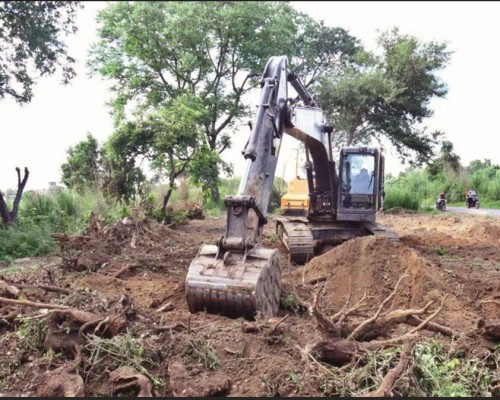
The Uttar Pradesh government has formally contested the findings of the Forest Survey of India (FSI), which alleged that tree felling for the 111-kilometre Upper Ganga Canal road project had exceeded the approved 20-metre right-of-way.
In a compliance report recently submitted to the National Green Tribunal (NGT), state authorities stated that no evidence was found of trees being cut beyond the designated limits. The government reported that 17,607 trees were felled across Ghaziabad, Meerut, and Muzaffarnagar districts—significantly fewer than the 112,772 trees originally approved for removal.
The latest submission follows a series of investigations ordered by the tribunal in response to earlier reports indicating extensive loss of vegetation along protected canal zones. Officials said that 13 sites were inspected using on-site visits, Google satellite imagery, and cross-section assessments. “Based on available evidence, no instance of tree felling beyond the permitted right-of-way was identified,” the compliance document stated.
However, FSI joint director Meera Iyer submitted a separate report in February confirming that at several locations, tree cutting exceeded 20 metres. The FSI provided photographic records and satellite images, including recent visuals from May 2024, showing substantial clearances.
Responding to the conflicting findings, the tribunal noted that the matter requires expert scrutiny before further work can proceed. A hearing on the case is scheduled for July 16.
Commenting on the dispute, Satendra Singh, a renowned environmentalist and Chairman of the Indian Council of Industrial Management (ICIM), who is also an intervener in the proceedings, said:
"It is crucial that the facts around this large-scale tree felling are established transparently and scientifically. While development projects are important, they must not come at the cost of irreversible ecological damage. Satellite imagery, field inspections, and independent assessments should be harmonised to create an accurate record. Only then can an informed decision be taken that safeguards both infrastructure progress and the region’s fragile environment. We have consistently advocated that compliance with environmental norms should be non-negotiable."
Experts say the final outcome could set an important precedent for how environmental compliance is enforced in large infrastructure corridors.