
Uttar Pradesh Expands Subsidy Support for Textile and Garment Sector Investments
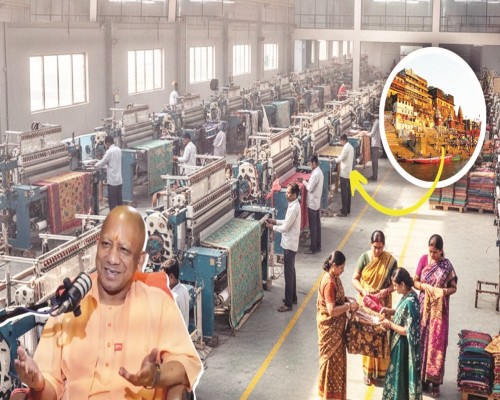
In a major policy push aimed at accelerating industrial growth and attracting greater investment, the Uttar Pradesh government has approved amendments to its Textile and Garmenting Policy–2022, extending a wider range of subsidies and incentives to investors in the textile and apparel sector.
The revised policy seeks to make the state more attractive for textile and garment manufacturing by expanding the scope of financial assistance and bringing additional types of investments under the incentive framework.
One of the most significant changes is that investors who had already made investments of up to 20 percent before 2022 will now also be brought under the ambit of the policy. This means that eligible investors who began their projects before the policy formally came into force may now also receive benefits and investment-linked support.
The amendment was approved in a cabinet meeting and is being seen as a strategic effort to strengthen Uttar Pradesh’s position as a growing hub for textile and garment manufacturing.
Under the revised provisions, investors will now be eligible for subsidies on administrative buildings, machinery and plant installations as well. Earlier, subsidies were not available on administrative building construction, machinery or plant-related expenditure, which had been a long-standing concern among industry stakeholders.
Officials indicated that the inclusion of these components will significantly reduce the capital burden on new and expanding textile units and make project implementation more viable for investors.
The policy change is also intended to support a broader industrial ecosystem rather than only the production floor. By including infrastructure such as administrative facilities and core industrial machinery within the subsidy structure, the state appears to be moving toward a more practical and investor-responsive framework.
According to the state government, the original Textile and Garmenting Policy–2022 was introduced to encourage large-scale investment in the textile and apparel sector by offering land-related subsidies and other financial incentives. However, investors had been seeking a wider subsidy base to better reflect the actual cost of establishing textile and garment units.
In response, the government has now expanded the benefit structure to cover these previously excluded elements.
Another key feature of the revised policy is that investments made before 2022 in the sector will no longer be automatically excluded, provided they meet the prescribed conditions. This retrospective inclusion is expected to benefit companies that had already committed capital before the official rollout of the policy.
The government has also indicated that the policy’s incentive structure will remain effective until 2027, and that investors making eligible investments during this period will continue to receive the corresponding benefits.
In an additional move aimed at promoting skill-based industrial entrepreneurship, the revised policy also extends benefits to individuals trained in textile engineering who go on to establish units in the sector. Earlier, such benefits were generally limited to those who had received education from recognized institutions only.
The amendment also includes a social inclusion component. For Dalit and Scheduled Tribe textile engineers, the age limit for availing benefits under the policy has reportedly been increased from 35 years to 40 years, thereby widening access and encouraging more participation from underrepresented communities.
Industry observers believe the policy changes could provide a meaningful boost to Uttar Pradesh’s ambitions of becoming a stronger player in India’s textile and garment value chain, particularly at a time when states are increasingly competing to attract labour-intensive manufacturing investment.
With textiles and garments being among the most employment-generating sectors, the revised policy is expected to not only encourage industrial investment but also support job creation, ancillary growth and regional economic development across the state.