

Over 8,600 Complaints Filed Against Sitting Judges in a Decade, Government Informs Parliament
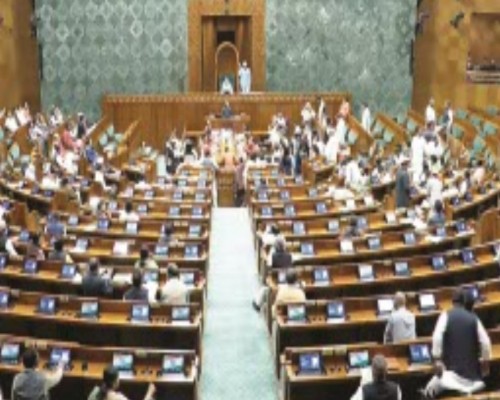
The office of the Chief Justice of India has received a significant number of complaints against sitting judges of the Supreme Court and various High Courts over the past decade, according to information provided by the Union Ministry of Law and Justice in Parliament. The data reveals that a total of 8,630 complaints were submitted against judges during this period, reflecting growing public scrutiny of the higher judiciary.
The information emerged in response to a question raised in the Lok Sabha regarding whether the government maintains any records or database related to complaints of misconduct or corruption against judges of the Supreme Court and High Courts. In a written reply, the Minister of State for Law and Justice clarified that complaints received against sitting judges are forwarded to the office of the Chief Justice of India for appropriate consideration.
According to the figures presented, the highest number of complaints—1,170—were received in the year 2024, indicating a sharp increase in grievances lodged against members of the higher judiciary. In contrast, the lowest number of complaints, 518, were recorded in 2020. These numbers form part of the broader dataset covering a ten-year period.
While the government acknowledged the receipt of complaints, it did not provide specific details regarding the action taken in response to these allegations. The reply did not clarify how many of these complaints were found to be credible or what disciplinary measures, if any, were initiated against the judges concerned.
Experts note that complaints against judges are generally handled through an internal mechanism within the judiciary. Such complaints are typically treated as confidential, which means that information about investigations or outcomes is rarely made public unless the matter escalates significantly.
The issue of judicial accountability has periodically surfaced in public debate, particularly in cases where allegations against judges become widely known. However, the internal nature of the complaint-handling process often limits transparency. As a result, the general public rarely receives detailed information about how complaints against members of the higher judiciary are addressed.
In its response to Parliament, the government emphasized that the independence of the judiciary is a fundamental principle enshrined in the Constitution of India. Complaints against judges of the higher courts are examined within the judicial framework itself, ensuring that the process remains consistent with the constitutional separation of powers.
The discussion also highlighted broader questions about whether a more structured system for recording, monitoring, and resolving complaints against judges should be established. Some lawmakers suggested that greater institutional transparency could strengthen public confidence in the justice system, while others cautioned that any reform must carefully preserve judicial independence.
Overall, the disclosure of the decade-long complaint data provides a rare glimpse into the scale of grievances submitted against members of the higher judiciary, while also underscoring the delicate balance between accountability and institutional autonomy in India’s judicial system.