
Policy, Politics, Education and Industry: A Conversation with Dr. Anil Agarwal
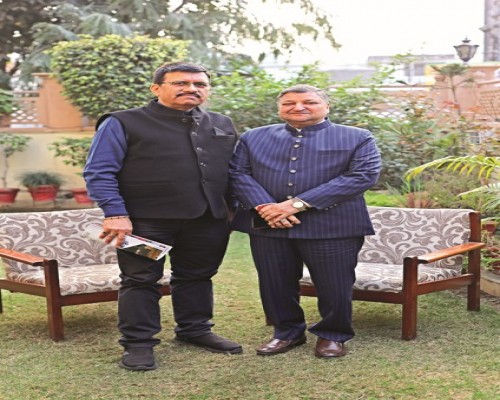
Satendra Singh:
First of all, sir, a very warm welcome to UV India News.
Dr. Anil Agarwal:
Thank you very much.
Satendra Singh:
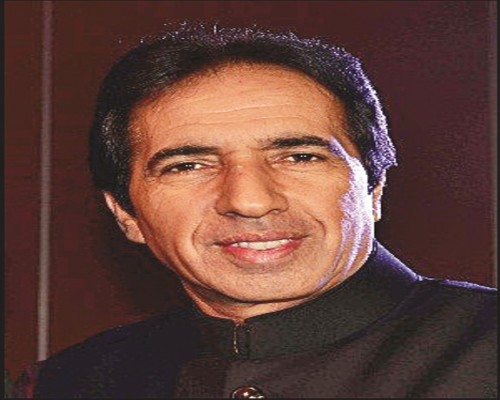
I extend my heartfelt greetings to you. Today, we have with us Dr. Anil Agarwal, who has joined our platform. Through this conversation, we wish to understand his views on contemporary politics, the direction of the country, and what the government is doing for the industrial sector.
You are the Vice-Chancellor of HRIT University and, along with being an educationist, you are also an active politician. You are widely known for your polite nature and for ensuring that no one who comes to you returns without a solution to their problem. Once again, we warmly welcome you.
To begin with, I would like to know about your political journey. Before entering politics, you were in government service, is that correct?
Dr. Anil Agarwal:
Yes, I was in government service until 2004. After that, I resigned and established educational institutions. Subsequently, I entered active politics.
Satendra Singh:
How did you decide to enter politics? You have always been deeply involved in social service.
Dr. Anil Agarwal:
I believe that when one works in the field of social service, politics provides a much wider platform. Through politics, you can serve the public at large and in much greater numbers.
Politics is the space where policies are formulated. If you can put forward your views firmly at the policy-making level and a policy is framed in public interest, its benefits naturally reach the masses.
Honourable Prime Minister Shri Narendra Modi has taken major steps in this direction. Under his leadership, India has become the world’s fourth-largest economy in the last 11 years. Today, India’s strength is acknowledged globally. His diplomatic policies are recognised worldwide, and India’s voice is heard with respect across nations.
Good policies emerge only when there is continuous engagement with the public. When you listen to people, you receive valuable inputs. Those inputs are then conveyed to the government, and today we are witnessing very positive outcomes of that process.
Satendra Singh:
You have been a Member of Parliament and actively participated in parliamentary proceedings. Is there any moment from your parliamentary tenure that remains particularly memorable for you?
Dr. Anil Agarwal:
Certainly. When Articles 370 and 35A were abrogated, I was a Member of Parliament. I consider that moment a golden chapter of my life, as my vote contributed to that historic decision under the leadership of Prime Minister Modi.
Similarly, when Muslim women were freed from the practice of triple talaq, I was also a Member of Parliament at that time. I voted in favour of my Muslim sisters. These moments remain deeply memorable for me.
Satendra Singh:
How do you view the current politics of the opposition? The bitterness between the ruling party and the opposition has increased significantly, and the opposition often criticises even positive initiatives of the government. What, in your view, is the reason for this?
Dr. Anil Agarwal:
The opposition today is frustrated, disappointed, and directionless. The principal opposition party, the Congress, never imagined that it would remain in opposition for such a long period. As a result, they are making baseless allegations against the Bharatiya Janata Party and Prime Minister Modi.
The public does not accept false accusations. This is precisely why people place greater trust in Prime Minister Modi. Opposition politics does involve criticism, but there is a limit and a method to it.
Today, opposition leaders, particularly Rahul Gandhi, have crossed all boundaries. This is why the Congress continues to lose elections one after another. They have moved away from public issues and instead raise matters that the public finds inappropriate.
For example, the issue of voter revision was raised aggressively, but voter verification is essential. This process is not new; it was conducted even during Congress rule. The public understands this well.
History shows that electoral manipulation occurred earlier as well. The people are fully aware of these facts. That is why today, when Prime Minister Modi makes a promise, he delivers. He works tirelessly—18 to 19 hours a day—for the nation.
Through initiatives like Make in India, the country is progressing rapidly. GDP growth is among the strongest globally. Farmers receive direct benefits through PM-Kisan, poor women get free LPG connections, millions receive free healthcare under Ayushman Bharat, and infrastructure development has accelerated significantly.
Airports have increased, Vande Bharat trains are expanding, and railway infrastructure is far superior to what it once was. People can feel this transformation, which is why they continue to support the BJP and Prime Minister Modi.
Satendra Singh:
Recently, elections were held in Bihar, where you also played the role of an in-charge. Despite opposition claims, a decisive mandate was achieved. What would you like to say about this outcome?
Dr. Anil Agarwal:
I would say that this was never a genuine public issue. The people of Bihar experienced, perhaps for the first time, elections without re-polling or booth-level violence. Voter purification is essential.
If votes of deceased persons or infiltrators are used to form governments, such a system cannot function. People also remember the era of lawlessness during earlier regimes.
In contrast, under Prime Minister Modi’s leadership, Bihar has seen improved infrastructure and better governance. Chief Minister Nitish Kumar has done commendable work. These factors collectively led to the electoral victory.
Satendra Singh:
In a way, can it be said that the people of Bihar have endorsed voter verification with full confidence?
Dr. Anil Agarwal:
Yes, absolutely. The verdict clearly reflects that.
Satendra Singh:
The government has introduced new labour laws. How do you view these reforms from the perspective of industry and labour?
Dr. Anil Agarwal:
These labour laws will benefit both industry and workers. A detailed reading shows that they are designed for the welfare of labour while also supporting industrial growth.
At a time when global economies are under strain and geopolitical tensions persist, India stands out as a country performing well on every front. A stable government, a strong economy, and a positive business environment naturally benefit industries, and when industries grow, workers benefit as well.
Satendra Singh:
As an educationist and Vice-Chancellor, how do you view the government’s efforts in education and skill development?
Dr. Anil Agarwal:
The education system introduced during colonial times was designed to create clerical manpower. Prime Minister Modi recognised this and introduced fundamental reforms through the New Education Policy.
A dedicated Ministry of Skill Development was created, and coordination between education and skill development has significantly improved employment opportunities. Today, students aspire not just for jobs but for entrepreneurship and startups.
It is a matter of pride that more than 100 unicorn startups have emerged under Prime Minister Modi’s leadership. This is highly encouraging for the economy and serves as inspiration for the youth.
Satendra Singh:
We are currently in Ghaziabad, which you also belong to. What do you see as the biggest challenge here?
Dr. Anil Agarwal:
Ghaziabad’s population is growing rapidly due to migration. Its infrastructure is among the best in Uttar Pradesh, but improvement is always necessary.
One major concern is winter pollution. However, proactive steps such as water sprinkling by the municipal corporation have been taken. With cooperation between citizens and the administration, these challenges will be addressed effectively.
Satendra Singh:
What is your message to the people of Ghaziabad?
Dr. Anil Agarwal:
We are servants of the people of Ghaziabad. We continuously work for them and seek their inputs so that we can serve them even better.
Satendra Singh:
Despite being involved in politics, education, and social service, how do you manage time for your family?
Dr. Anil Agarwal:
Our sources of inspiration are Prime Minister Narendra Modi and Home Minister Amit Shah. They manage responsibilities at a national level, while we work at a city level.
I closely observed their time management during my six years as a Member of Parliament. With strong willpower and commitment, effective time management becomes possible.
I would also like to assure industrialists of Ghaziabad that both the state and central governments are continuously working for industrial growth. Banks have been instructed to support industries, outdated laws are being removed, and new reforms are being introduced.
If we all work together, we will certainly achieve our vision of making India a global leader with a strong and resilient economy.
Satendra Singh:
Thank you very much for your valuable time.
Dr. Anil Agarwal:
Thank you. Namaskar.