

Supreme Court Emphasises Reducing Litigation, Not Prolonging It
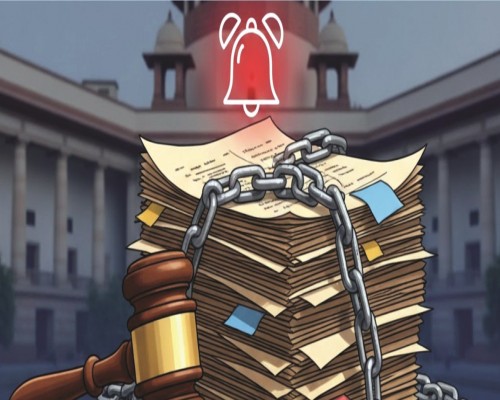
The Supreme Court has observed that judicial processes should aim to reduce litigation rather than create additional rounds of legal proceedings. The apex court stated that cases should not be unnecessarily sent back to High Courts for fresh consideration, as such actions often restart litigation and defeat the objective of timely justice.
The observation was made by a bench comprising Justice Rajesh Bindal and Justice Manmohan while examining a matter that had been remanded by the Allahabad High Court for reconsideration. The Supreme Court held that remanding cases without compelling reasons leads to avoidable delays and increases the burden on litigants as well as the judicial system.
Setting aside the High Court’s order, the bench noted that the purpose of judicial review is to bring finality to disputes wherever possible. The court clarified that the intent of judicial scrutiny is to curtail prolonged litigation and not to encourage repetitive adjudication of the same matter at different levels.
The case related to an application seeking correction in land records. Initially, the application was rejected by the Collector. The appellate authority also dismissed the appeal against the Collector’s order. After a considerable lapse of time, a fresh application for correction was filed, which was again rejected by the competent authority.
Subsequently, the matter reached the High Court, which, after hearing all concerned parties, directed that the case be reconsidered afresh. Challenging this decision, the matter was brought before the Supreme Court.
While examining the legal framework, the Supreme Court observed that the High Court had incorrectly interpreted the provisions of the Uttar Pradesh Revenue Code, 2006, particularly Section 30, which deals with the maintenance of land records and field books. The apex court held that the High Court’s interpretation had the potential to unnecessarily reopen settled issues.
The Supreme Court concluded that remanding the matter for fresh consideration was unwarranted and set aside the High Court’s order. It reiterated that judicial intervention should focus on delivering effective and conclusive justice rather than prolonging disputes through repeated reconsideration.
The ruling reinforces the principle that courts must exercise restraint in ordering remands and ensure that legal processes serve the broader objective of reducing litigation and ensuring timely resolution of disputes.