

Supreme Court Warns Against AI-Generated Fake Judgments, Calls Them ‘Poisonous Gas’ for Justice System
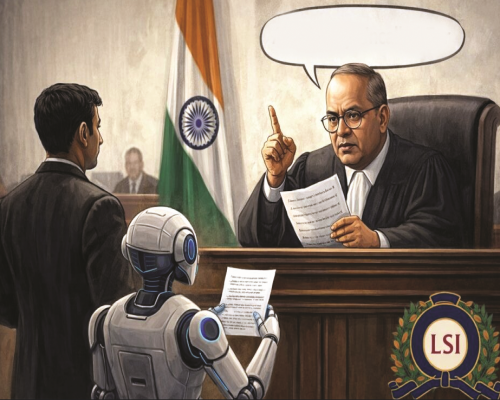
The Supreme Court has expressed serious concern over the growing misuse of Artificial Intelligence in legal proceedings, warning that fabricated judicial decisions generated through AI can pose a grave threat to the administration of justice.
The Court observed that fake judgments created through AI tools are comparable to “poisonous gas” because they may appear convincing at first glance but can ultimately damage the credibility and functioning of the justice delivery system. It stressed that courts cannot rely on judgments or citations generated through AI without proper verification.
The observations came while the Supreme Court was examining a matter involving a dispute connected with a university and its academic administration. During the proceedings, certain judicial precedents cited before the Court were found to be either non-existent or inaccurately represented.
The Bench cautioned advocates and litigants against placing blind reliance on AI-generated legal material. It noted that although Artificial Intelligence can be useful as an assistance tool, it cannot replace human judgment, legal research or professional responsibility.
AI Can Assist, But Human Verification Is Essential
The Supreme Court acknowledged that technological tools can improve efficiency in legal research and help professionals access large volumes of information quickly. However, it emphasised that the responsibility for verifying the authenticity and accuracy of judicial precedents ultimately rests with the lawyer relying upon them.
The Court made it clear that any judgment, legal proposition or citation generated through an AI platform must be cross-checked from reliable and authorised legal sources before being presented in judicial proceedings.
According to the Court, the danger becomes particularly serious when an AI system produces a completely fabricated case name, citation, legal principle or judicial observation in a manner that appears genuine. Such errors, commonly described as AI “hallucinations”, may mislead courts if they are not carefully verified.
The Bench observed that placing fabricated judgments before a court not only weakens the case of the party concerned but can also adversely affect the integrity of the judicial process.
Concern Over Growing Use of Generative AI
The ruling assumes significance as lawyers, researchers and litigants increasingly use generative AI platforms for drafting, research and analysis. These technologies are capable of producing sophisticated legal language and summarising complex material, but they may also generate incorrect or entirely fictitious information.
The Supreme Court highlighted that AI-generated information cannot automatically acquire legal credibility merely because it is presented in a persuasive or professional format.
It stressed that the legal profession demands a higher standard of accuracy because judicial decisions can affect individual rights, commercial interests, public institutions and the interpretation of law.
The Court therefore underlined the need for advocates to exercise independent judgment instead of mechanically reproducing material generated by technology.
Lawyers Remain Responsible for Material Filed in Court
The Bench also emphasised the professional responsibility of advocates appearing before courts. Lawyers are expected to ensure that every precedent cited in support of their arguments is genuine, relevant and accurately represented.
The Court indicated that failure to undertake basic verification could invite serious consequences, particularly where fabricated or misleading judicial material is submitted as authentic.
It further observed that courts must remain vigilant against the possibility of technological tools being used to manufacture apparently authoritative legal material.
The Supreme Court's observations reinforce an important principle emerging across the legal profession: Artificial Intelligence may function as a powerful research and drafting assistant, but legal accountability cannot be transferred to an algorithm.
The judgment serves as a warning that technological convenience must not come at the cost of judicial accuracy. As AI becomes increasingly integrated into professional legal practice, human scrutiny, verification and responsibility will remain essential safeguards for preserving the credibility of the justice system.