
Chaitra Navratri 2026: Dates, Rituals and Spiritual Significance of the Nine-Day Festival of Goddess Durga
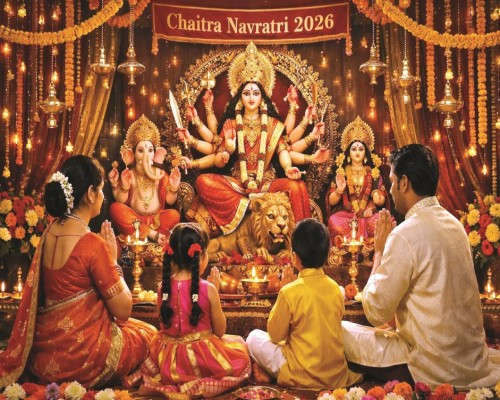
Chaitra Navratri, one of the most significant festivals in the Hindu religious calendar, marks the beginning of a sacred nine-day period dedicated to the worship of Goddess Durga and her nine divine manifestations. The festival is celebrated with deep devotion across India and among Hindu communities worldwide, symbolizing the triumph of divine energy over negativity and ignorance.
In 2026, Chaitra Navratri is scheduled to begin in March and continue for nine days, culminating with the celebration of Ram Navami, the birth anniversary of Lord Rama.
The festival is widely regarded as a time of spiritual renewal and religious observance. Devotees participate in fasting, perform special prayers, recite sacred texts, and decorate homes and temples to honor the goddess. Many also consider this period the beginning of the Hindu lunar new year, giving it additional cultural and spiritual importance.
Dates and Calendar of Chaitra Navratri 2026
According to the traditional Hindu Panchang, Chaitra Navratri in 2026 begins on 19 March and concludes on 27 March, with the ninth day celebrated as Ram Navami.
During these nine days, each day is dedicated to a different form of Goddess Durga, collectively known as the Navadurga. Devotees perform special rituals and prayers corresponding to each form of the goddess.
Navratri 2026 Calendar
|
Day |
Date |
Goddess Worshipped |
|
Day 1 |
19 March |
Maa Shailputri |
|
Day 2 |
20 March |
Maa Brahmacharini |
|
Day 3 |
21 March |
Maa Chandraghanta |
|
Day 4 |
22 March |
Maa Kushmanda |
|
Day 5 |
23 March |
Maa Skandamata |
|
Day 6 |
24 March |
Maa Katyayani |
|
Day 7 |
25 March |
Maa Kalaratri |
|
Day 8 |
26 March |
Maa Mahagauri |
|
Day 9 |
27 March |
Maa Siddhidatri (Ram Navami) |
Each day carries its own religious significance and rituals, reflecting different aspects of divine feminine power and spiritual discipline.
Ghatasthapana: The Ritual that Marks the Beginning of Navratri
The festival formally begins with the sacred ritual known as Ghatasthapana or Kalash Sthapana, which symbolizes the invocation of Goddess Durga into the household or temple altar.
During this ritual, a pot (kalash) filled with water is placed on a bed of soil where barley seeds are sown. A coconut wrapped in red cloth is placed on the kalash, representing divine energy and prosperity. The ritual is considered highly auspicious and must be performed during a specific muhurat (auspicious time).
For Chaitra Navratri 2026, the most auspicious morning muhurat for Ghatasthapana is approximately between 6:52 AM and 7:43 AM. Another favorable time is the Abhijit Muhurat in the afternoon, which falls around midday.
Religious traditions emphasize performing the ritual within the prescribed time window to ensure that the prayers are conducted under the most auspicious planetary alignments.
Religious Importance of Chaitra Navratri
Chaitra Navratri holds immense spiritual significance in Hindu philosophy. The festival celebrates the divine feminine energy (Shakti) that sustains the universe and represents the power of righteousness over evil.
Throughout the nine days, devotees worship the nine forms of Durga:
- Shailputri – the embodiment of strength and purity
- Brahmacharini – the symbol of devotion and austerity
- Chandraghanta – representing courage and grace
- Kushmanda – the creator of the universe
- Skandamata – the nurturing mother
- Katyayani – the warrior goddess
- Kalaratri – the destroyer of darkness
- Mahagauri – symbolizing peace and purity
- Siddhidatri – the bestower of spiritual powers
Devotees believe that sincere prayers during this period bring prosperity, protection and spiritual growth.
Rituals and Devotional Practices
Observances during Navratri include a variety of religious practices that differ slightly across regions but share a common spiritual theme.
1. Fasting and Dietary Discipline
Many devotees observe fasts throughout the nine days, consuming only sattvic foods such as fruits, milk, buckwheat flour, and rock salt.
2. Daily Worship and Mantra Recitation
Special prayers, aarti, and recitation of sacred texts such as the Durga Saptashati or Devi Mahatmya are performed to seek the blessings of the goddess.
3. Lighting the Sacred Lamp
A continuous flame (Akhand Jyot) is often maintained in temples and homes as a symbol of divine presence.
4. Cultural and Religious Gatherings
Navratri is also marked by devotional singing, community prayers, and spiritual discourses celebrating the glory of Goddess Durga.
A Festival of Faith and Renewal
Chaitra Navratri represents more than a religious observance; it symbolizes the renewal of faith, spiritual discipline and the awakening of positive energy. Many devotees use this period for self-reflection, meditation and charity.
The culmination of the festival with Ram Navami, the birth anniversary of Lord Rama, reinforces the message of righteousness and moral strength that lies at the heart of the celebration.
Across India, the festival transforms homes and temples into vibrant spaces of devotion, reminding believers of the enduring power of faith and the divine feminine principle that sustains life and harmony.