

Gopashtami: The Day Lord Krishna Herded Cows for the First Time
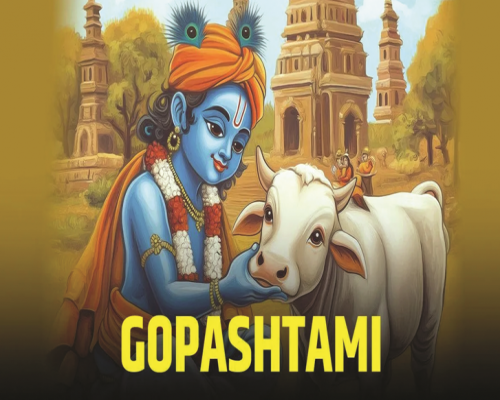
According to ancient scriptures, Gopashtami marks the day when young Lord Krishna, with the permission of his mother Yashoda, took the cows for grazing for the very first time. When Krishna expressed his wish to engage in this divine duty, Nanda Baba and Yashoda Mata consulted the learned Shandilya Rishi to determine the most auspicious time. The sage chose the eighth day (Ashtami) of the bright fortnight of Kartik month as the sacred moment for this significant event.
The Divine Moment in Vrindavan
On this blessed day, preparations were made with great devotion in Gokul and Vrindavan. For the first time, the people of Vraj witnessed their beloved Krishna stepping into his new role as a cowherd, symbolizing his entry into responsibility and service. Although Krishna had long desired to accompany the older cowherds, Yashoda Mata initially refused, fearing for her young son’s safety. Eventually, upon Krishna’s heartfelt insistence, permission was granted, and the event was celebrated as Gopashtami.
A Celebration of Devotion and Duty
Scriptures describe that on this day, Nanda Baba performed a grand worship ceremony, seeking divine blessings for the prosperity of cows and the welfare of the community. The entire region was filled with joy and spiritual fervor as Krishna, adorned with ornaments and holding his flute, led the cows toward the pastures, accompanied by his friends.
Even today, devotees commemorate this sacred event by performing Go-Puja (worship of cows), cleaning cowsheds, and feeding cows with green fodder, jaggery, and sweets. The day also holds deep significance for those who regard cows as symbols of nurturing, abundance, and the divine motherly presence in Hindu dharma.
The Spiritual Essence of Gopashtami
The festival of Gopashtami not only celebrates the bond between Krishna and his beloved cows but also conveys a profound message of compassion, service, and humility. In temples across the country, special rituals are held, and devotees offer prayers to Lord Krishna as Gopala—the protector of cows.
In Vrindavan and Mathura, the occasion is marked with processions, devotional singing, and traditional rituals where cows are beautifully decorated. The celebration emphasizes the harmony between nature, animals, and human life — values deeply rooted in Indian spiritual tradition.
Through this observance, devotees remember that service to cows, as performed by Krishna himself, is a form of service to divinity. The festival continues to inspire people to uphold compassion, gratitude, and balance with nature — virtues that Lord Krishna exemplified in his life.