

Jagannath Rath Yatra 2026: The Sacred Seven-Day Stay at Gundicha Temple
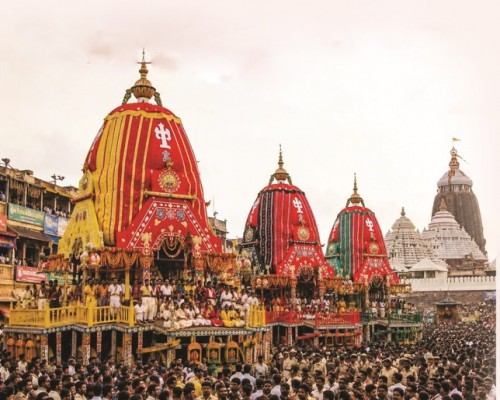
The Jagannath Rath Yatra is one of India’s most revered and grand religious festivals, celebrated with deep devotion, centuries-old traditions and massive public participation. In 2026, the Rath Yatra of Lord Jagannath is scheduled to begin on 16 July, drawing lakhs of devotees to the sacred town of Puri and inspiring similar celebrations across India and abroad. The festival marks the divine journey of Lord Jagannath, Lord Balabhadra and Goddess Subhadra from the main Jagannath Temple to the Gundicha Temple.
A central part of this sacred tradition is the stay of the deities at the Gundicha Temple. After leaving the main shrine in beautifully decorated wooden chariots, the three deities proceed along the Grand Road towards Gundicha Temple, which is considered an important destination in the annual Rath Yatra. The temple remains vacant for most of the year, but during the Rath Yatra period it becomes the temporary abode of Lord Jagannath, Lord Balabhadra and Goddess Subhadra.
According to tradition, the deities stay at Gundicha Temple for seven complete days, while the total festival period is commonly counted as nine days, including the journey to the temple and the return journey. This sacred return journey is known as Bahuda Yatra, when the deities travel back to the main Jagannath Temple.
The Gundicha Temple holds special religious significance because it is popularly regarded as the divine garden house or the home of Lord Jagannath’s aunt. Devotees believe that the Lord visits Gundicha Temple with his brother and sister to rest, bless devotees and symbolically experience a more intimate and affectionate form of worship away from the main temple. This aspect gives the Rath Yatra a deeply emotional character, as devotees see the Lord not only as a supreme deity but also as a loving and accessible divine presence.
The stay at Gundicha Temple also represents the inclusive nature of Jagannath culture. During Rath Yatra, Lord Jagannath comes out of the sanctum and gives darshan to people from all sections of society. Devotees who may not be able to enter the main temple also get the opportunity to see the Lord on the chariot. This public darshan is one of the reasons why the festival is seen as a celebration of equality, devotion and divine grace.
Before the Rath Yatra, the deities undergo the traditional Anasara period after the ceremonial bathing ritual known as Snana Purnima. During this period, Lord Jagannath, Lord Balabhadra and Goddess Subhadra are believed to symbolically fall ill after the sacred bath and remain away from public darshan for around 15 days. After this period of rest and healing, the deities appear before devotees during Rath Yatra, making the festival even more spiritually significant.
The journey begins with elaborate rituals and the pulling of massive chariots by thousands of devotees. Lord Jagannath’s chariot is known as Nandighosha, Lord Balabhadra’s chariot is called Taladhwaja, and Goddess Subhadra’s chariot is known as Darpadalana. These chariots are newly constructed every year and decorated with traditional art, colours and sacred symbols.
One of the most important rituals associated with Rath Yatra is ChheraPahara, in which the Gajapati King of Puri ceremonially sweeps around the chariots with a golden broom and sprinkles sandalwood water. This ritual conveys a powerful spiritual message that before Lord Jagannath, there is no distinction between a king and an ordinary devotee.
During the stay at Gundicha Temple, special worship and rituals are performed daily. Devotees gather in large numbers to seek blessings, offer prayers and participate in the spiritual atmosphere created by the festival. The temporary stay of the deities is treated as a period of divine hospitality, devotion and celebration.
The Rath Yatra is not only a religious procession but also a cultural symbol of Odisha and India’s spiritual heritage. It reflects the living traditions of devotion, service, community participation and faith. The sight of thousands of devotees pulling the chariots with chants of “Jai Jagannath” remains one of the most powerful expressions of collective devotion in the country.
The seven-day stay at Gundicha Temple therefore carries deep meaning. It symbolises divine movement towards devotees, the Lord’s closeness to humanity, and the belief that God steps out of the temple to bless all people equally. For devotees, the journey of Lord Jagannath to Gundicha Temple is not merely a ritual; it is a sacred reminder of compassion, humility, equality and the eternal bond between the Lord and his followers.