

Somnath: A Monument to India’s Unbreakable Faith and Civilisational Resilience
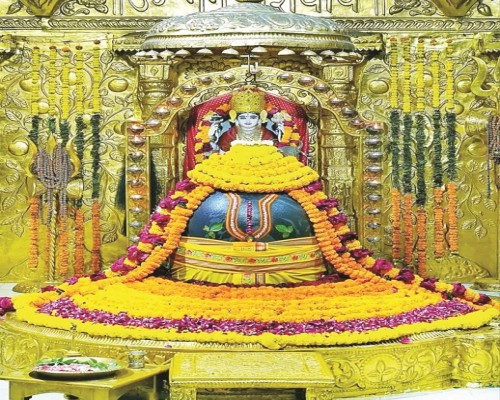
India’s history bears witness to long periods of upheaval, invasion, and cultural disruption. Yet, despite centuries of destruction and repeated assaults on its spiritual and cultural institutions, the core of Indian civilisation has endured. Among the most powerful symbols of this endurance stands the Somnath Temple—an enduring emblem of faith, identity, and civilisational continuity.
Somnath is not merely a place of worship. It represents the deeper essence of Indian consciousness: the idea that culture, spirituality, and collective memory cannot be erased by force. Over a thousand years ago, when foreign invasions sought to dismantle India’s religious and cultural foundations, Somnath became a primary target. Yet, each time it was destroyed, it was rebuilt—stronger, grander, and more resolute.
A Symbol Beyond Stone and Structure
The temple’s repeated reconstruction is not simply an architectural story; it is a reflection of a civilisation’s refusal to surrender its identity. Where conquest attempted to impose erasure, Indian society responded with renewal. Somnath stands as a testament to the belief that spiritual heritage cannot be annihilated by violence or domination.
Throughout history, attacks on Somnath were meant to break the psychological and cultural confidence of a people. Instead, the temple came to symbolise resistance—not in arms, but in faith, perseverance, and collective memory.
Rebuilding After Destruction
Historical records describe multiple invasions in which the temple was razed. Each destruction was followed by reconstruction, often under difficult political and social conditions. These acts of rebuilding were not merely acts of devotion; they were declarations of cultural survival.
The repeated restoration of Somnath demonstrates a distinctive feature of Indian civilisation: continuity through renewal. Where physical structures were reduced to ruins, values remained intact. Faith was not confined to stone walls—it lived in the hearts of people who refused to let their spiritual inheritance fade.
Independence and Cultural Reclamation
After India regained independence, Somnath assumed renewed significance. The reconstruction of the temple in the modern era was seen not only as a religious act but also as a civilisational reaffirmation. It represented the reclamation of historical dignity and cultural self-respect after centuries of subjugation.
The restored temple emerged as a national symbol of cultural resurgence—signifying that India’s identity is not defined by periods of defeat, but by its capacity to rise with dignity and purpose.
Civilisational Meaning in the Present
In contemporary times, Somnath continues to inspire reflection on India’s spiritual roots and cultural unity. It stands not as a monument of triumph over others, but as a reminder of the enduring power of belief, tradition, and continuity. The temple reflects the idea that India’s strength lies in its civilisational depth—where faith, philosophy, art, and resilience converge.
Somnath’s significance also lies in its message to future generations: that a civilisation grounded in values cannot be dismantled by external aggression or historical adversity. The temple embodies the principle that identity is preserved not merely through memory, but through action—through rebuilding, renewal, and reaffirmation.
Faith as the Foundation of Continuity
More than a religious site, Somnath represents the living spirit of a civilisation that has survived disruption without losing its essence. It symbolises the unbroken thread of Indian thought—where spirituality, culture, and resilience remain intertwined across centuries.
The story of Somnath is ultimately the story of India itself: a civilisation tested by history, scarred by conflict, yet never erased. It reminds the world that while structures may fall, the soul of a culture endures. In that enduring spirit, Somnath stands as a timeless declaration of India’s unshakeable faith and civilisational continuity.