
BJP’s Political Influence Could Remain Strong for Decades, Says Election Analyst
The Bharatiya Janata Party (BJP) is likely to remain a dominant force in Indian politics for many years if it continues to maintain its current governance model, organizational strength, and electoral strategy, according to noted election analyst Pradeep Gupta. His observations have sparked fresh debate about the future trajectory of Indian politics and the evolving balance of power between the ruling party and the opposition.
Gupta, who heads one of India's leading election research organizations, believes that the political era that began with the BJP's rise to power in 2014 remains far from over. He argues that the party's sustained electoral success, expanding geographical reach, and ability to connect with a broad spectrum of voters have positioned it as the central force in contemporary Indian politics.
Drawing comparisons with previous periods of political dominance, Gupta noted that Indian politics has historically witnessed long phases of influence by major political parties. He suggested that the BJP's current political standing has the potential to shape national politics for an extended period, much as earlier eras were influenced by other dominant political formations.
According to the analyst, the future of both the ruling alliance and the opposition will largely depend on governance performance and public perception. He emphasized that strong electoral mandates are often linked to the electorate's assessment of a government's ability to deliver development, stability, and effective administration. As long as voters continue to view the government's performance positively, the BJP is likely to retain a significant advantage in national elections.
A major factor highlighted in the analysis is the BJP's organizational structure. The party's extensive grassroots network, disciplined cadre system, and ability to mobilize support across diverse social and regional groups have enabled it to consistently convert political support into electoral victories. Gupta observed that electoral success is not determined solely by leadership but also by the strength of party organization and strategic execution on the ground.
The analyst also pointed to the challenges faced by opposition parties. While several regional parties continue to maintain influence within their respective states, the opposition has struggled to present a unified national alternative capable of challenging the BJP across the country. Differences in ideology, leadership ambitions, and electoral priorities have often limited the effectiveness of opposition alliances.
Referring to recent political developments in southern India, Gupta noted that electoral outcomes in states traditionally considered difficult terrain for the BJP indicate a gradual shift in the country's political landscape. He suggested that voters in some regions are increasingly willing to consider alternatives to long-established political parties, creating opportunities for the BJP to expand its influence beyond its traditional strongholds.
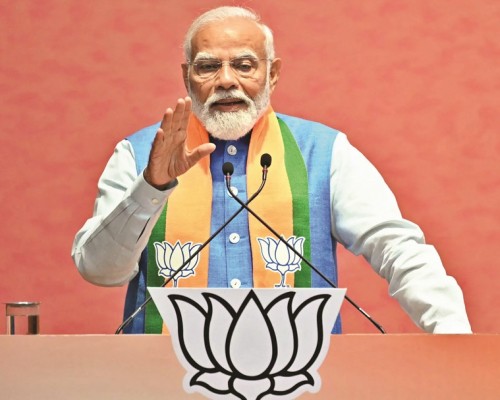
The analysis further highlights the importance of leadership in shaping voter perception. Prime Minister Narendra Modi continues to be regarded by supporters as one of the BJP's strongest political assets. His popularity, combined with the party's organizational capabilities, has contributed significantly to its electoral success over the past decade.
Gupta also emphasized that politics remains dynamic and that long-term political dominance can never be taken for granted. Economic performance, governance outcomes, social issues, and the emergence of new political leadership can all influence future electoral trends. However, he believes that the BJP currently enjoys a substantial strategic advantage due to its organizational depth and ability to set the national political agenda.
Political observers note that the discussion reflects a broader trend in Indian politics, where electoral competition is increasingly shaped by leadership-driven campaigns, voter outreach mechanisms, and ideological narratives. Whether the BJP's dominance continues for another decade or longer will depend on its ability to maintain public confidence and adapt to changing political realities.
For now, however, analysts agree that the party remains firmly positioned at the center of India's political landscape, with its influence extending far beyond electoral victories and into the broader direction of national political discourse.